
Cloud environments are dynamic, scalable, and powerful—but without a deliberate strategy, they become chaotic and expensive. For engineering teams, the goal is ensuring that every resource provisioned contributes directly to performance, reliability, and business value rather than just a cheaper bill. This is what cloud optimization is all about: a continuous process of tuning infrastructure to align with workload requirements and business objectives.
The reality for many organizations is the "FinOps Paradox": teams have visibility into waste, but lack the workflow mechanisms to fix it. Dashboards show the problem, but they don't solve it. To bridge the gap between visibility and execution, engineers need a structured approach that integrates optimization into their daily habits rather than treating it as a quarterly cleanup project.
This guide outlines the four essentials of cloud optimization—Performance, Resource, Infrastructure, and Architecture—and provides a step-by-step roadmap to implement them.
Key Takeaways
- Optimization requires more than just visibility: Seeing waste is not the same as fixing it; successful teams bridge the gap by embedding actionable fixes directly into engineering workflows.
- The four pillars of efficiency: A complete cloud optimization strategy must address four key areas—Performance, Resource, Infrastructure, and Architecture—to ensure holistic optimization.
- Performance and cost are linked: True cloud optimization doesn't sacrifice speed for savings; it rightsizes resources to meet SLAs without over-provisioning.
- Shifting left is critical: The most effective cloud optimization strategies catch inefficiencies early in the development lifecycle (via CI/CD and PR checks) rather than reacting later on to monthly bills.
1. Cloud Performance Optimization

Performance is often the first lever engineers pull because user experience depends on it. However, over-provisioning for performance is a primary driver of cloud waste. True optimization balances speed and stability with efficiency.
What Is Cloud Performance Optimization?
Cloud performance optimization is the practice of configuring cloud resources to meet specific throughput, latency, and reliability Service Level Agreements (SLAs) without excess provisioning. It’s not a one-time setup, but a continuous practice of monitoring and adjusting as workloads evolve.
In a cloud-native environment, performance is more about efficiency than it is raw power. Optimization in cloud computing requires ensuring that workloads have the resources they need to perform at peak levels during high demand, while scaling down gracefully when demand subsides, effectively saving on cloud costs.
Key Techniques
To achieve cloud native optimization without sacrificing reliability, teams should focus on dynamic adjustments rather than static provisioning.
- Autoscaling tuning (horizontal & vertical): Autoscaling groups are often misconfigured with static thresholds. Optimization involves tuning these thresholds based on custom metrics (like request latency) rather than just CPU utilization. Horizontal scaling adds instances, while vertical scaling (often harder to automate without specialized tools) adjusts resource sizes.
- Load balancing optimization: Ensuring traffic is distributed efficiently across instances prevents hot spots that degrade performance. Proper health check configurations ensure traffic isn't routed to failing nodes.
- VM/instance CPU–memory ratio tuning: Many workloads are memory-bound or CPU-bound. Selecting an instance family that aligns with the specific bottleneck of the application prevents paying for stranded resources.
- Cloud-native optimization with serverless functions: Serverless architectures (like AWS Lambda or Cloudflare Workers) abstract infrastructure management but introduce cold starts and execution time limits. Optimizing memory allocation in serverless functions often reduces execution time, paradoxically lowering cost while improving performance.
- Improving data access patterns: Performance often lags at the data layer. Implementing caching strategies (Redis, Memcached), optimizing storage classes (e.g., using Provisioned IOPS only when necessary), and using read replicas for heavy query loads can drastically reduce latency.
Tools & Platforms
The market is flooded with cloud optimization tools and cloud optimization software, but the right choice depends on where the data meets the developer.
- Cloud-native monitoring tools: Tools like Amazon CloudWatch or Azure Monitor provide the raw metrics—CPU, memory, disk I/O—needed to identify bottlenecks.
- Cloud development efficiency tools: These integrate with CI/CD pipelines to flag performance regressions before code hits production.
- Cloud optimization software for performance analytics: Advanced platforms use machine learning to predict workload patterns and suggest rightsizing opportunities that a human might miss.
- A cloud optimization platform’s role in real-time detection: The most effective platforms both report and detect anomalies in real-time. For example, if a deployment causes a spike in latency or error rates, the platform should surface this immediately to the engineering team.
2. Cloud Resource Optimization
While performance ensures the app runs fast, resource optimization ensures it runs lean. This is the domain of efficiency—using the minimum amount of resources necessary to achieve the desired outcome.
What Is Cloud Resource Optimization?
Cloud resource optimization focuses on the efficient use of compute, storage, and networking components. This pillar addresses the "Usage" lever of optimization, targeting idle resources, unattached volumes, and over-provisioned instances.
Techniques
Effective cloud optimization techniques in this area require a mix of automated policies and engineering hygiene.
- Rightsizing compute resources: This involves matching instance types and sizes to workload performance requirements. It applies to VMs, containers, and database instances. For example, moving from a generic instance to a compute-optimized instance for batch processing tasks.
- Storage class lifecycle management: Data often sits in expensive hot storage tiers long after it is needed. Policies that automatically move data to infrequent access or archive tiers (like S3 Glacier) are critical for long-term storage efficiency.
- Optimizing container requests/limits: In Kubernetes, setting requests too high leads to stranded resources on nodes (waste), while setting limits too low leads to throttling. Industry data puts wasted cloud spend at roughly 30% (March 2026 update: Flexera's 2026 figure is 29%), much of it from idle, unattached, or over-provisioned resources, making this a critical area for immediate savings.
- Cloud workload optimization in Kubernetes requires continuous tuning of these parameters based on actual usage, not just theoretical peaks.
- Cluster efficiency in Kubernetes: Beyond individual pods, the cluster itself must be optimized. Node bin-packing ensures that pods are scheduled tightly to minimize the number of active nodes required. On EKS, Karpenter is the current default here. It provisions and consolidates nodes in seconds and bin-packs far more aggressively than Cluster Autoscaler; pair it with KEDA for event-driven workloads.
- Eliminating unused resources: This is the low-hanging fruit of optimization. It includes identifying and deleting idle EBS volumes, removing stale snapshots, and releasing unused Elastic IPs.
Tools & Services
Cloud resource optimization tools have evolved from simple reporting dashboards to actionable automation engines.
- Cloud optimization tools for rightsizing: These tools analyze historical usage data (e.g., CPU, RAM, Network) to recommend specific instance type changes. The best tools provide confidence scores to help engineers assess risk.
- Real-time cloud usage optimization services: These services monitor active resources and can trigger automated actions, such as terminating instances that have been idle for a set period.
- Cloud optimization and usage analytics tools: Analytical tools help visualize spend by team, application, or environment, often using cloud attribution methods to map costs without relying solely on manual tags.
Cloud Usage Optimization
A subset of resource optimization, cloud usage optimization focuses on when resources are used.
- Dev/test scheduling: Non-production environments rarely need to run 24/7. Scheduling them to shut down nights and weekends (so only running during working hours—roughly 50–60 hours per week) can reduce costs by over 60%.
- Non-prod auto-shutdown routines: Implementing logic to detect inactivity (e.g., no API calls for 2 hours) and automatically shut down environments ensures that forgotten resources don't burn budget.
- Workflow-native optimization: The most effective optimization happens when engineers receive actionable fixes within their existing workflows. Instead of logging into a separate dashboard, an engineer receives a Slack notification or a Jira ticket with a pre-scoped fix for an idle resource.
3. Cloud Infrastructure Optimization

Infrastructure optimization looks at the broader topology of your cloud footprint. It involves selecting the right architectural patterns and services to support your applications.
What Is Cloud Infrastructure Optimization?
Cloud infrastructure optimization is the process of optimizing the underlying architecture and components that support workloads. It encompasses compute, storage, network, security, and service selection, aiming to build a foundation that is both performant and cost-effective.
Key Techniques
Optimizing infrastructure often involves making architectural trade-offs.
- Choosing the right service for the workload: Not every application needs a dedicated VM. Moving suitable workloads to serverless functions or container orchestration platforms can significantly reduce management overhead and cost.
- Network path and data transfer optimization: Data egress fees can be a silent budget killer. Optimizing network paths, keeping traffic within availability zones where possible, and using content delivery networks (CDNs) effectively are vital cloud optimization strategies.
- Storage architecture redesign: Switching from block storage (expensive, high performance) to object storage (cheaper, scalable) where appropriate can yield massive savings.
- Optimization in cloud computing for distributed systems: For distributed applications, ensuring data locality and minimizing cross-region calls reduces latency and data transfer costs.
- Hybrid cloud optimization considerations: For organizations managing on-prem and cloud resources, optimization involves placing workloads where they run most efficiently—keeping stable, predictable workloads on-prem or on Reserved Instances, while using the public cloud for bursty demand.
Cloud Migration Optimization
The migration phase is a critical window for cloud migration optimization. Decisions made here dictate the baseline efficiency of the environment.
Comparison of Migration Strategies
|
Strategy |
Description |
Impact on Optimization |
|
Lift and Shift (Rehosting) |
Moving applications to the cloud as-is without code changes. |
Low. Often results in lift-and-shift inefficiencies where legacy sizing leads to immediate cloud waste. |
|
Replatforming |
Making minimal optimizations to the OS or database (e.g., switching to managed RDS) without rewriting core code. |
Medium. Offers some cloud-native benefits like reduced management overhead but retains architectural limits. |
|
Refactoring (Re-architecting) |
Rewriting applications to be cloud-native (e.g., monolith to microservices). |
High. Enables granular scaling, serverless adoption, and better resource utilization, though it requires significant upfront effort. |
- Modernizing during migration: Avoiding the lift-and-shift trap is essential. While faster, lifting virtual machines directly to the cloud often results in lift-and-shift inefficiencies where legacy sizing leads to cloud waste.
- Continuous optimization post-migration: Migration is not the finish line. Implementing continuous optimization cycles ensures that infrastructure adapts as the application stabilizes in the new environment.
- Migration pipelines with cost and performance controls: Integrating cost checks into migration pipelines helps teams spot potential budget overruns before the cutover occurs.
Azure Cloud Optimization and Multi-Cloud Scenarios
As organizations adopt multi-cloud strategies, cloud optimization platforms that span providers become crucial.
- Azure cloud optimization: Specifics include utilizing Azure Hybrid Benefit for licensing savings and leveraging Azure Advisor for native recommendations.
- Azure performance tuning: Tuning Azure SQL Database DTUs or selecting the correct Virtual Machine Scale Set (VMSS) configuration matches supply to demand.
- Azure autoscaling and VM class selection: Azure offers a vast array of VM sizes; matching these to workload profiles (e.g., B-series for burstable workloads) is a key optimization tactic.
- Managing hybrid networks across clouds: Hybrid cloud optimization requires careful management of VPNs and ExpressRoute/Direct Connect links to minimize latency and transfer costs.
- Multi cloud optimization tool market: Trends show a shift towards unified platforms that provide a single pane of glass for cloud optimization solutions, abstracting the differences between AWS, Azure, and GCP APIs.
4. Cloud Architecture Optimization
Architecture optimization is the strategic layer. It involves designing systems that are inherently scalable and efficient, reducing what is known as architectural waste.
What Is Cloud Architecture Optimization?
Cloud architecture optimization is the practice of designing architectures that scale efficiently and minimize overhead. It targets issues like over-replication of data, chatty microservices that drive up network costs, and poor service boundaries that prevent independent scaling.
Techniques
Modern architectural patterns facilitate cloud optimization best practices.
- Event-driven architectures: Decoupling services using queues (like SQS or Kafka) allows components to scale independently and process jobs asynchronously, smoothing out demand spikes.
- Stateless service design: Stateless applications are easier to scale horizontally and are prime candidates for Spot Instances, which offer deep discounts but can be interrupted.
- Efficient caching layers: Implementing caching at the edge (CDN) and application layer (Redis) reduces the load on expensive compute and database resources.
- Database schema design for scale: Optimizing schema design for NoSQL or relational databases ensures efficient queries and minimizes I/O operations.
- Container-focused architecture optimization: Designing containers to be lightweight and fast-starting enables more aggressive bin-packing and faster autoscaling.
- Multi-tenant architecture optimization: For SaaS providers, optimizing resource sharing among tenants while maintaining isolation is key to unit economics.
Cloud Optimization Strategies That Affect Architecture
Successful optimization requires a holistic view of three specific levers: Usage, Configuration, and Rate. Understanding how these levers interact is critical for building a cloud optimization strategy that addresses all sources of waste.
The Three Levers of Cloud Optimization
|
Optimization Lever |
Focus Area |
Key Actions |
|
Usage Optimization |
Ensuring you only use what you need. |
Rightsizing instances, scheduling dev/test environment shutdowns, and eliminating idle resources like unattached volumes. |
|
Configuration Optimization |
Tuning settings and architecture for efficiency. |
Optimizing storage tiers (e.g., GP3 vs. IO1), setting correct container limits, and fixing expensive default configurations. |
|
Rate Optimization |
Reducing the unit cost of resources. |
Smart commitment planning (RIs/Savings Plans) and negotiating pricing based on usage forecasts. |
- Pre-deployment checks in IaC pipelines: Scanning Terraform or CloudFormation templates for cost anomalies before deployment shifts optimization left.
- Policy-as-code for architecture constraints: Enforcing policies (e.g., "no GP2 volumes in production") ensures that architecture remains optimized by default.
- Optimization embedded in pull requests: Instead of after-the-fact reviews, providing cost impact analysis directly in GitHub Pull Requests allows engineers to make informed decisions before code is merged.
Cloud Workforce Optimization (Developer Workflow Optimization)
The final piece is optimizing the human element—the developer workflow.
- Reducing toil with automation: Automating the detection and remediation of waste removes the burden from engineering teams. Cloud optimization services should act as a force multiplier, not a task generator.
- Embedding optimization habits into CI/CD: Cloud workforce optimization means making cost a standard metric in the deployment pipeline, just like test coverage or security.
- Surfacing early warnings: Providing feedback on potential cost spikes or performance regressions before deployment fosters a habit of proactive optimization.
This matters more now that AI coding agents (Claude Code, Amazon Q, GitHub Copilot, Cursor) author infrastructure-as-code at volume, producing more, smaller PRs than manual review can absorb. Cost and policy checks have to run in the PR itself, or agent-generated changes bypass governance entirely.
How to Optimize Cloud Performance and Efficiency: Step-by-Step

Implementing cloud optimization solutions requires a structured approach. Here is a step-by-step roadmap to move from reactive firefighting to proactive management.
1. Establish Baselines
You cannot optimize what you do not measure, and you cannot fix what you do not own. Traditional tagging strategies often fail because tags go stale or lack granularity.
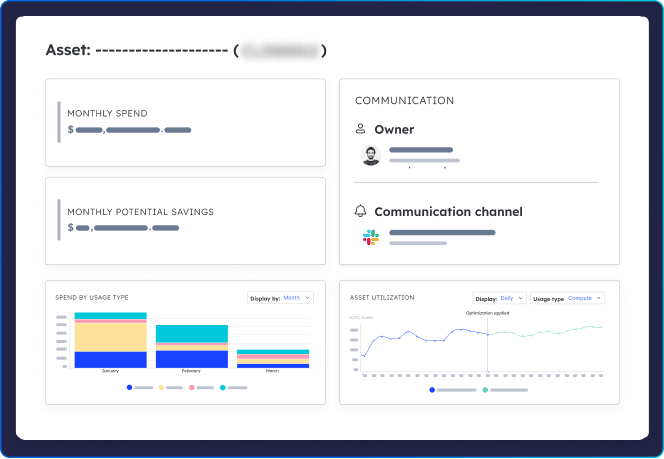
- Map ownership automatically: Instead of relying on manual tags, use tools that infer ownership from deployment patterns, code repositories, and collaboration signals. This creates a living map of who owns which resource from day one. This is where Cloud ex Machina (CxM) starts: it infers ownership from deployment patterns, Git history, and IAM roles rather than tags, building a living map of who owns the cloud resources. Cost signals route to the right team even where tag coverage is incomplete.
- Create KPI anchors: Define what success looks like beyond just lower bills.
- Optimization Velocity: Track how quickly recommendations are implemented (days vs. weeks).
- Engineering Cost Ownership Index: Measure the percentage of teams actively tracking cost KPIs in their daily workflow.
- Waste Prevention Rate: Monitor how often inefficiencies are caught in pre-production before they impact the monthly bill.

2. Prioritize High-Impact Areas
Don't try to fix everything at once. Focus on the high-ROI opportunities by applying the Three-Lever Optimization framework:
- Usage Optimization (start here, fastest and safest wins): Eliminate waste first: unattached EBS volumes, stale snapshots, and dev/test environments left running nights and weekends, before committing to anything.
- Configuration Optimization (lock in the gains): Fix the settings and architecture that recreate waste: storage tiers (GP3 vs. IO1), container requests/limits, expensive defaults.
- Rate Optimization (commit last, on validated workloads): Once waste is removed and workloads are rightsized, cover the stable, steady-state baseline with Reserved Instances or Savings Plans. Committing before you rightsize just locks in waste at a discount.
3. Implement Cloud Optimization Strategies
Generic recommendations like "rightsize this instance" often sit in backlogs because they lack context. Engineers need to know why a change is safe.
- Provide technical proof: When suggesting a rightsizing move (e.g., c5.xlarge to c5.large), include data showing that peak CPU usage will remain within safe limits (e.g., P99 latency stays below SLA thresholds).
- Automate the "How": Don't just flag the issue; generate the specific Terraform or CloudFormation code required to fix it.
- Execute safely: For configuration and usage fixes, generate the change as a reviewable pull request. For rate optimizations, use a platform that recommends and designs the commitment for approval following internal policies and guidelines.
4. Embed Optimization Into Developer Workflows
To prevent drift, optimization must be part of the "how we build" process, solving the delivery problem rather than just the visibility problem.
- Shift left with PR checks: Catch expensive configurations before they merge. If a developer provisions a premium SSD for a dev environment, an automated comment on the Pull Request should flag the cost impact and suggest a cheaper alternative.
- Deliver to where engineers work: Route specific, scoped tasks to the relevant owner via Slack or Jira. An actionable alert saying "Your analytics-dev environment costs $280/month and has been idle for 12 days" allows an engineer to shut it down immediately or justify its existence. CxM turns each finding into a scoped plan (risk, effort, code change, impact, etc.) that can translate directly into a Jira ticket or a Terraform pull request for the right engineer to review and merge, rather than another dashboard to check.
- Verify in the pipeline: Integrate cost optimization checks into CI/CD pipelines to ensure that new deployments do not violate budget guardrails or efficiency standards.
5. Monitor, Verify, and Measure Outcomes
Optimization is a continuous loop, ensuring that every action drives a verified business result.
- Closed-loop verification: Verify that the changes had the desired effect. Did the rightsizing reduce the bill as predicted without spiking error rates? This before-and-after analysis builds trust in the process.
- Track verified outcomes: Instead of tracking "opportunities found," track "verified savings realized" and their contribution to business objectives.
- Feedback loops: Use successful optimizations to refine future recommendations. If a team consistently rejects a specific type of rightsizing recommendation due to performance concerns, the system should learn to adjust its thresholds.
Get more insight into optimizing your cloud environment workflows through our latest whitepaper: Closing the Workflow Gap in Cloud Cost Management
Conclusion
Cloud optimization isn’t meant to restrict resources. Instead, it should help workflows take full advantage of the cloud by eliminating waste and friction. Whether you are looking for cloud optimization services companies, evaluating cloud optimization tools, or building an internal practice, the goal remains the same: to transform cloud infrastructure from a cost center into a strategic asset.
By focusing on the four essentials—Performance, Resource, Infrastructure, and Architecture—and embedding these practices into developer workflows, organizations can achieve sustainable efficiency. The shift from reactive cost cutting to proactive, engineer-led optimization helps teams move faster, build better, and scale with confidence.
Stop chasing cost alerts and start fixing them. CxM bridges the gap between FinOps visibility and engineering action, turning optimization into a seamless part of your daily workflow.
Request a demo today to see how you can turn cloud waste into engineering value.