

In an effort to stay ahead, AI is being deployed faster than most organizations have time to govern it. Models are shipping to production. Vendor-embedded AI is spreading through SaaS stacks. Engineers are building copilots on the side. And across cloud environments, AI inference workloads are burning through GPU-hours that nobody has formally tied to a team, a budget line, or a compliance review.
But then comes the inevitable question: what happens when one of those models makes a bad call, and someone asks who approved it?
The tooling market has caught up to this problem. AI governance tools now cover everything from model registries and bias detection to audit reporting and policy enforcement. But the category is fragmented, the terminology is inconsistent, and the feature overlap between platforms can make evaluation feel like a rabbit hole.
This guide cuts through that for engineering leaders, platform teams, and compliance-focused practitioners who need to evaluate AI governance solutions with practical clarity.
Key Takeaways:
- AI governance tools are distinct from MLOps and data governance platforms. They're built to manage model accountability, policy enforcement, and audit readiness across the AI model lifecycle.
- The biggest governance failures happen not at the point of model training, but at the point of deployment and ongoing production operation, where ownership and oversight tend to dissolve.
- Enterprise organizations need tools that integrate with existing developer workflows. Governance that requires context-switching to a separate portal will be treated as a compliance checkbox, not a real control.
- When evaluating AI governance tools for enterprises, multi-cloud coverage, audit trail quality, and workflow integration matter as much as individual feature lists.
- AI infrastructure cost governance is an underaddressed dimension of the same problem. The cloud resources running your AI models need the same ownership and optimization accuracy you apply to the models themselves.
What Are AI Governance Tools?
AI governance tools are software solutions that help engineering and compliance teams monitor, control, audit, and enforce policies across the AI model lifecycle. They track which models exist in production, who owns them, how decisions are being made, and whether deployments comply with internal policies and external regulatory frameworks.
Understanding where AI governance ends and adjacent categories begin is essential before you evaluate any tool.
A practical way to tell the three categories apart:
- MLOps governs the development and deployment pipeline: experiment tracking, versioning, and performance monitoring. It tells you whether a model is performing as expected.
- Data governance governs the datasets feeding models: quality, lineage, access controls, and privacy compliance. It tells you whether the data is trustworthy.
- AI governance governs model behavior and accountability in production: who approved it, whether it can be explained and audited, and whether it complies with policy and regulation. It tells you whether the organization is accountable for what the model does.
All three matter. But only AI governance directly addresses the compliance, explainability, and ownership challenges that surface when models make consequential decisions at scale.
AI governance addresses what happens after a model is in production. A model registry tells you what version is running. An AI governance platform tells you who approved that deployment, what policies were checked before it went live, and whether a regulator next quarter will be satisfied with the documentation.
The regulatory environment is accelerating adoption across three fronts:
- EU AI Act: Tiered obligations for high-risk AI use cases, including documentation, human oversight, and auditability requirements that need tooling support to satisfy at scale.
- SOC 2 for AI systems: Auditors are formalizing what "controls" look like for machine learning in production, and organizations are under increasing pressure to demonstrate those controls exist.
- Internal risk mandates: Legal and security teams in financial services, healthcare, and public sector organizations are setting their own AI governance requirements ahead of, or alongside, external regulation.
Why Engineering Teams Need AI Governance Solutions

The gap between model deployment velocity and governance maturity is widening. Engineering teams ship models faster than governance processes can usually follow. In most organizations, model ownership is ambiguous the moment it launches; the team that built it may have moved on, the infrastructure team may not understand what it does, and the compliance team has no inventory of what's running.
This isn't a hypothetical risk scenario. It's the default state at most companies running AI at any meaningful scale.
The "shadow AI" problem compounds this. Most organizations are running far more AI than they've formally inventoried, across at least three categories:
- Vendor-embedded AI: Customer success, HR, and finance SaaS platforms all run models making real decisions that were never reviewed or approved by engineering or compliance. Because IT and compliance already approved the vendor years ago, these automatic AI updates bypass standard engineering reviews, even though the software is now actively making automated decisions or screening data.
- Employee-built tools: Copilots, automation scripts, and internal assistants built on foundation model APIs that exist outside any formal review or ownership process.
- Externally sourced models: Pre-trained or fine-tuned models sourced from open-source registries or third-party vendors, integrated without documented provenance or ongoing oversight. Security firms like Snyk and JFrog frequently publish reports on software supply chain risks. They emphasize that downloading unregulated open-source AI models introduces code vulnerabilities, license compliance issues, and a total lack of "model provenance" (knowing exactly what data the model was originally trained on).
When any of these models make consequential decisions, in hiring, credit, customer routing, or claims processing, the exposure is significant. The organizations best positioned to manage it built accountability into the model lifecycle before a problem surfaced.
Core Capabilities to Look for in AI Governance Tools and Platforms
Not every organization needs the same governance capabilities. But understanding the core capability categories is essential for building an evaluation framework that reflects actual requirements.
Model Inventory and Lifecycle Tracking
A centralized registry of all AI models in production is the foundation of any meaningful governance program. Without knowing what models exist, who deployed them, and what data they were trained on, every other governance activity is operating blind.
A complete model registry entry should capture at minimum:
- Model identity and version: Name, version, deployment date, and a link to the source repository or artifact store.
- Training data lineage: What datasets were used and whether they contain personal data subject to regulatory requirements.
- Deployment context: Environment (production, staging, dev), cloud account and region, and owning team or application.
- Approval history: Who reviewed the model, what policies were checked, and the outcome of each check.
At low volume, manually cataloging models is workable. But as the number of models grows, teams multiply, and cloud accounts proliferate, that process collapses under its own weight. Tools that can automatically discover and inventory models across AWS, Azure, and GCP are essential at enterprise scale.
Policy Enforcement and Access Controls
Role-based access to model configurations and inference endpoints prevents unauthorized modification and creates a documented accountability chain for internal security and external audit purposes.
The more valuable capability is guardrails that block deployment until a model clears a defined review process. Engineers don't need to remember to engage in governance. The governance step is built into the path to production.
Explainability and Bias Detection
When an AI decision gets challenged, auditors need documentation showing how the model reached it. Explainability tools provide that, though the depth of what they explain can vary. Some platforms surface basic feature importance scores, others support more granular analysis like SHAP values. How much you need depends on the risk level of your models and which regulations apply to them.
Bias monitoring is the other part that needs accountability. And it can't be a one-time pre-deployment check. Model behavior drifts as real-world input data changes, which means bias that wasn't there at launch can surface months into production. Continuous monitoring with alerting is the only way to catch it.
Audit Trails and Governance Reporting
Immutable logs of model changes, approvals, and incidents separate governance tooling from governance theater. The trail must capture who made what decision and when, in a format that satisfies external auditors.
Exportable reports mapped to specific frameworks, EU AI Act, ISO 42001, or SOC 2, reduce documentation burden during audits and lower the risk of gaps surfacing under external review.
Workflow Integration
A governance tool that lives outside engineering workflows will be treated the same way engineers treat any compliance checkbox: completed minimally and avoided when possible. This is the most frequently underweighted capability when evaluating AI governance tools, and it's the one that most directly determines whether governance actually happens in practice.
Prioritize tools that integrate with the version control systems, ticketing platforms, and communication tools your teams already use. Governance workflows that surface in GitHub, Jira, and Slack get engaged. Governance workflows that require a separate portal get deferred.
What to Look for In AI Governance Tools: Quick Reference
|
Capability |
Why It Matters |
What to Look for in a Tool |
|
Model inventory |
You can't govern what you haven't inventoried |
Automated discovery across multi-cloud; version history and training data lineage |
|
Policy enforcement |
Prevents unauthorized deployment; creates accountability chain |
Role-based access controls; guardrails that gate production deployments |
|
Bias and explainability monitoring |
Satisfies regulatory requirements; surfaces fairness issues before incidents occur |
Ongoing monitoring with drift alerting; configurable protected attributes |
|
Audit logging |
Demonstrates controls to external auditors |
Immutable, timestamped, exportable logs; role-based approval trail |
|
Governance reporting |
Reduces manual documentation burden during audits |
Framework-aligned exports (EU AI Act, ISO 42001, SOC 2) |
|
Workflow integration |
Determines whether governance is actually practiced |
Native integrations with GitHub, Jira, Slack; no separate portal required |
Best AI Governance Tools

The AI governance tooling market is organized around distinct categories, each built for different primary users and use cases. Matching your organization's needs to the right category matters more than comparing feature lists across individual vendors.
Enterprise AI Governance Platforms
Enterprise AI governance platforms are full-stack solutions for organizations running AI at scale across multiple cloud environments. They provide centralized policy management, audit capabilities, and executive reporting, with the integration depth required by regulated industries.
What to expect:
- Enterprise SSO
- Role hierarchies that map to organizational structures
- Regulatory reporting modules aligned to specific compliance frameworks
- Multi-stakeholder visibility spanning engineering, compliance, and executive teams.
Key considerations are implementation complexity and time-to-value. These platforms require configuration, policy definition, and organizational alignment before they function as intended. Factor that timeline in honestly, particularly if a compliance deadline is driving the initiative.
AI Model Governance Tools for Engineering Teams
This category covers tools built for ML engineers and platform teams, including model versioning, registry management, experiment tracking, and deployment guardrails. They fit into existing MLOps workflows without requiring adoption of a new platform.
The strength is tight MLOps toolchain integration and a developer-first experience. If your primary need is reliable model versioning and deployment policies with low overhead, this category delivers faster time-to-value than an enterprise platform. The limitation is audit trail quality. These tools are built for engineering efficiency, not regulatory defense. Teams in regulated industries typically end up layering additional tooling on top as compliance requirements mature.
AI Compliance Tools for Data Governance
This category addresses a specific dimension of AI governance: the data feeding models. These platforms extend existing data governance frameworks to cover training data lineage, consent tracking for personal data used in model training, and data access policies for ML pipelines.
The organizations that benefit most are those already running data governance programs that need to extend coverage to AI model inputs and outputs. If your organization has invested in data cataloging and lineage tracking, these tools connect existing capabilities to the AI model layer. For teams where training data provenance and consent management are primary compliance concerns under GDPR or CCPA, this distinction is operationally significant.
Responsible AI and Audit-Focused Tools
This category covers tools purpose-built for ethical AI review, bias detection, explainability reporting, and third-party audit support. They're narrower in scope than full enterprise platforms but deeper in specific capabilities.
Common use cases include pre-deployment risk assessments, ongoing fairness monitoring, and incident documentation for regulatory inquiries. These tools are typically layered on top of a model registry or MLOps platform to supply the explainability and bias detection that general-purpose platforms cover only shallowly. The teams that benefit most are those in regulated industries with strict explainability requirements, and smaller organizations building compliance readiness ahead of scale.
AI Governance Tool Comparison by Use Case
|
Tool Category |
Primary Users |
Core Strengths |
Deployment Context |
Best Suited For |
|
Enterprise governance platform |
Compliance teams, engineering leadership, executives |
Full-stack coverage, regulatory reporting, multi-cloud |
Large enterprise, regulated industries |
Organizations with formal compliance requirements and multi-cloud AI deployments |
|
Model registry and MLOps governance |
ML engineers, platform teams |
Developer experience, MLOps integration, deployment guardrails |
Engineering-led organizations, growth-stage |
Teams that need reliable model versioning and deployment controls with low implementation overhead |
|
Data governance plus AI compliance |
Data engineering, privacy and legal teams |
Training data lineage, consent management, data access policies |
Organizations with existing data governance programs |
Companies extending current data governance investment to cover AI model inputs |
|
Responsible AI and audit tooling |
Compliance, ethics, and risk teams |
Bias detection, explainability depth, audit documentation |
High-risk AI use cases in regulated industries |
Teams facing regulatory scrutiny for consequential AI decisions |
How to Evaluate AI Governance Tools for Your Organization
Feature matrices and analyst reports are useful starting points. But the questions that actually determine whether a tool will work in your environment are more specific. Here's a practical framework for moving from category awareness to a grounded vendor selection.
1. Define Your Governance Scope First
Before you evaluate any tool, map what you're actually governing. Internal models, third-party vendor-embedded AI, and employee-built tools on foundation model APIs each require different coverage, and your scope will rule out entire tool categories before you open a single vendor demo.
Answer these three questions first:
- What are you governing? Inventory internal models, vendor-embedded AI, and employee-built tools. Your scope determines which tool categories are even relevant.
- Which regulatory frameworks apply? EU AI Act obligations vary by use case risk classification. SOC 2 requirements for AI systems are still evolving. Know which frameworks are binding before you evaluate compliance reporting features.
- What is your most urgent risk? Whether it's audit readiness, bias monitoring, model inventory, or policy enforcement, starting with your most pressing need gives you a faster path to value.
2. Assess Workflow Fit, Not Just Feature Coverage
This is where most evaluations go wrong. A governance tool outside engineering workflows gets treated as any other compliance checkbox: completed minimally and avoided when possible.
Ask vendors how governance reviews are triggered within existing developer workflows. The answer should involve GitHub pull request integrations, Jira ticket creation, and Slack notifications, not a separate portal. If the demo shows governance in a standalone interface, that's a clear signal about the day-to-day engineer experience.
3. Evaluate for Scale and Multi-Cloud Coverage
If your AI workloads span AWS, Azure, and GCP, verify the tool can discover and inventory models across all three without separate configurations per cloud. Many tools in this category grew from a single-cloud origin and have uneven multi-cloud support. Coverage that works in a demo may require significant manual configuration in a real multi-account environment.
4. Scrutinize Audit Trail Quality
Not all audit logs are audit-grade. There's a meaningful difference between application-level logging and immutable, timestamped records that satisfy external auditors.
Verify logs are exportable in formats auditors can work with and that audit records have been tested in actual engagements. Check that the tool supports role-based approval workflows so model promotion decisions carry a documented accountability chain with named approvers and timestamps.
Where AI Governance and Cloud Cost Governance Intersect
Most AI governance discussions stop at the model layer. But there's a second governance problem that becomes unavoidable as AI workloads scale: the cost and configuration of the infrastructure running those models.
AI inference workloads on GPU-enabled instances and managed services are among the fastest-growing and least-understood line items in cloud budgets. The specific categories that tend to fly under the radar:
- GPU-optimized compute: Instances running model inference that are frequently oversized or running continuously when they should be scheduled.
- Managed AI services: AWS SageMaker, Bedrock, and Azure OpenAI usage that's difficult to attribute to a specific team or business objective without purpose-built attribution tooling.
- Experiment and training compute: GPU clusters spun up for training runs that aren't cleaned up after experiments complete, continuing to accrue cost with no live workload to show for it.
Engineering teams deploying AI models often have no visibility into whether the underlying infrastructure is rightsized, correctly attributed, or running when it should be.
This is where developer-first cloud optimization intersects with AI governance: ensuring AI infrastructure is owned, tracked, and optimized with the same rigor applied to the models themselves. An organization that can tell a regulator who approved a model deployment but can't identify who owns the GPU cluster running it hasn't fully solved the governance problem.
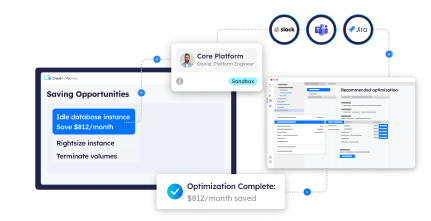
CxM's AI teammate, Dex, addresses this directly. Dex maps your entire cloud infrastructure with agentless, read-only access, connecting resources to workloads, IaC, and teams without relying on manual tags. So the GPU cluster running an AI inference workload is attributed to the right team from day one, whether or not anyone remembered to tag it. From there, Dex autonomously investigates cost and configuration findings, tracing root causes and assembling the full context engineers need to act. And when it's time to remediate, Dex delivers review-ready PRs, scripts, and CLI instructions directly into the tools your engineers already use. No context-switching, no manual triage, and no chasing down ownership after the fact.

Conclusion: Choosing the Right AI Governance Solution for Your Team
The best AI governance tools aren't the ones with the longest feature list. They're the ones that match your organization's actual governance scope, integrate with the workflows your engineers use, and give compliance teams the audit documentation they need without creating a parallel process that engineering teams route around.
Start by defining what you're governing and what your immediate risk priority is. Match that to the right tool category before evaluating vendors. And when you evaluate, weigh workflow integration at least as heavily as feature coverage. A governance capability that engineers don't engage with in practice isn't a control.
The organizations building durable AI governance programs treat it as an engineering discipline, not a compliance exercise. That means embedding governance into deployment workflows, automating ownership attribution rather than relying on manual processes, and connecting model accountability to the infrastructure layer where AI workloads actually run.
If your AI program is scaling and you're working through infrastructure cost and ownership challenges alongside governance ones, see how CxM approaches developer-first cloud optimization for AI workloads. Book a demo today.