

Your AI model just failed an audit, and now regulators want documentation of every dataset used in training. Your team goes looking and finds nothing. No lineage records or provenance trail. No clear owner for the data pipeline that produced the model.
These are the AI governance challenges that traditional data policies and tooling were never built for: training pipelines, continuous retraining, petabyte-scale unstructured data, and probabilistic outputs all break the assumptions those policies made. Traditional frameworks assume bounded data volumes reviewed by humans at a manageable pace. And the consequences of this lack of transparency can be significant. We're talking compliance exposure, operational harm, and high-stakes verticals like healthcare and direct patient risk.
AI systems, when set up properly, can manage complex governance at scale without adding to the workload of your teams. However, like any tool, AI governance is only as good as the data that feeds it. Understanding the most common AI governance challenges means you can take steps to mitigate them when you’re building your own solution.
Key Takeaways:
- Traditional data governance frameworks assume structured, human-reviewable data volumes. AI workloads break these assumptions across training data provenance, data quality, model versioning, and unstructured data classification.
- Big data governance challenges in AI environments require automated controls from the start. Volume, velocity, and variety at the petabyte scale make periodic auditing insufficient as a primary governance mechanism.
- Healthcare data governance in AI contexts introduces compounding obligations. PHI sensitivity, multi-system fragmentation, and clinical validation requirements turn general governance gaps into patient safety issues.
- Manual tagging fails at enterprise scale. Automatic attribution, inferred from deployment patterns, code repositories, and access signals, produces more accurate and durable ownership maps.
- Governance that exists outside engineering workflows gets bypassed consistently. Embedding controls directly into the tools engineers already use is the only reliable path to compliance that holds.
Challenges in Data Governance Specific to AI Workloads

AI systems don't just consume data. They inherit its quality problems, licensing constraints, and ownership gaps, and reproduce those problems at the scale of every inference they run.
Training Data Provenance and Lineage
Provenance (knowing where training data came from and being able to prove it) is both a governance requirement and an operational necessity. When a model fails an audit, the first question regulators ask is what the model was trained on.
Poor lineage tracking makes that question unanswerable. As a result, the downstream consequences follow a predictable pattern:
- Stale data risk. Models trained on outdated data may have learned patterns that no longer reflect reality, producing outputs that degrade over time without any visible signal.
- Bias propagation. Models trained on biased data propagate those biases at inference time, often without a visible failure signal until the damage is measurable.
- Licensing exposure. Models trained on improperly licensed data create legal exposure that typically surfaces after the model is already in production.
- Audit failure. Without documentation, organizations are left reconstructing data histories from incomplete records when compliance teams request it. That process is slow, expensive, and often inaccurate.
- Irreproducibility. Without lineage, you can't reliably reproduce a model's behavior for debugging, which means you also can't verify a fix worked.
Lineage needs to be tracked continuously. Treating it as a one-time documentation task is exactly how governance debt accumulates.
Data Quality as a Model Risk
Poor data quality in AI contexts is both an analytics problem and a governance risk with measurable consequences. In traditional analytics, bad data produces a bad report. In AI systems, it produces a model that generates unreliable outputs at every inference, and often these outputs look reasonable at first glance, making inaccuracies harder to spot. It’s like the old saying, “one bad apple spoils the bunch," except someone painted over the rotten parts so that the bad apple looks just as bright and shiny as the others, forcing you to meticulously examine each one to spot the culprit.
Regulators increasingly expect organizations to demonstrate that data quality was actively managed throughout training, not just validated once before training ran. A model trained on duplicated records may learn spurious correlations. A model trained on data with systematic missingness may underperform on the exact subpopulations where that gap was concentrated. Neither failure shows up cleanly in aggregate model metrics. That is why data quality governance needs to happen upstream.
Model Versioning and Retraining Governance
When a model is retrained on new data, the governance requirements don't carry over from the previous version. They reset. New training data must be provenance-checked. New outputs must be validated. The change must be documented for audit. Most organizations treat retraining as a purely technical operation and miss every governance obligation it triggers.
Automated retraining pipelines make this worse. The automation is efficient, but it can silently invalidate governance postures established for an earlier model version. A governance framework kept current with the model needs explicit checkpoints at each retraining cycle:
- Provenance sign-off. Confirm that all new training data has been sourced, licensed, and documented before the pipeline runs.
- Output validation. Validate model outputs against current performance and fairness criteria, not the criteria established for the previous version.
- Change documentation. Record what changed, why, and what the validation results showed in a format that supports audit.
AI Data Governance Challenges and Solutions Summary
|
Lifecycle Stage |
Key Governance Obligation |
Common Failure Mode |
Recommended Control |
|
Data Collection |
Provenance documentation; consent and licensing verification; PII classification |
Data ingested without source records; licensed content included without authorization |
Enforce source metadata capture at ingestion; automated PII scanning before data enters the pipeline |
|
Training |
Data quality validation; bias assessment; access control on training datasets |
Training runs on unvalidated or stale data; no record of who accessed training sets |
Quality thresholds enforced as pipeline gates; immutable access logs for training data |
|
Validation |
Output validation against defined performance criteria; bias testing across demographic subgroups |
Validation treated as pass/fail on aggregate metrics only; subgroup performance not assessed |
Structured validation checklist covering accuracy, fairness, and out-of-distribution behavior; documented sign-off before promotion |
|
Deployment |
Model artifact versioning; audit trail linking deployed model to training data and validation results |
No link between deployed model version and the data or validation run that produced it |
Model registry with immutable lineage records; deployment gated on documented validation completion |
|
Retraining |
Full governance reset: re-provenance new training data, re-validate outputs, document changes |
Retraining treated as a technical operation with no governance handoff; prior approval assumed to carry forward |
Explicit governance checkpoint at each retraining cycle; automated trigger for provenance check, validation run, and change documentation |
Big Data Governance Challenges in AI Environments
At the petabyte scale, governance frameworks built around periodic audits and manual classification are effectively absent.
AI systems operate on data volumes, velocities, and variety levels that most enterprise governance frameworks were never designed to handle. The scale introduces qualitatively different risks that traditional controls weren't built to catch.
Volume, Velocity, and Variety as Governance Risks
When data volumes exceed human review capacity, static classification schemes break down. Frameworks that relied on human reviewers to classify assets, verify ownership, and validate quality don't scale to what AI systems consume. Automated governance controls are a prerequisite at this scale.
Velocity creates a separate problem. Real-time data streams don't allow for traditional governance workflows. Event data flowing into a training pipeline needs classification, access control, and quality validation at ingestion speed. Teams that add governance after the fact find themselves perpetually catching up to data already in use.
Variety (the mix of structured, semi-structured, and unstructured data AI systems consume) creates the classification problem underlying many of the other challenges. When data doesn't fit cleanly into known schemas, existing governance tooling often can't classify it reliably. And unclassified data sits outside the governance perimeter entirely, accumulating risk.
Unstructured Data and the Classification Problem
AI systems frequently consume unstructured data (text, images, audio, logs) that doesn't fit traditional governance schemas. The most common categories of downstream harm from unclassified unstructured data are:
- PII in training corpora. Personal information embedded in text or document datasets without appropriate access controls or consent records.
- Unlicensed content. Copyright-protected or proprietary content used in training without authorization, creating legal exposure that may not surface until the model is in production.
- Sensitive information leakage. Confidential organizational data ingested into models that can reproduce fragments of it at inference time.
Each of these is a governance failure, rather than a technical accident. Data that wasn't classified wasn't subject to the controls classification would have triggered. So solving this requires governance controls that can classify unstructured data at ingestion, not controls that assume all data will arrive pre-labeled.
Big Data Governance Challenges in AI Environments Quick Reference
|
Dimension |
Core AI Risk |
Governance Gap |
Mitigation Approach |
|
Volume |
Data volumes exceed human review capacity; ownership becomes untraceable across millions of assets |
Periodic audits too infrequent to catch quality problems before they propagate into training; manual tagging can't keep pace with data growth |
Automated classification at ingestion; continuous lineage tracking; automatic attribution to replace manual ownership records |
|
Velocity |
Real-time data streams enter training pipelines faster than governance workflows can process them; compliance checks are bypassed because they exist outside the ingestion path |
Governance controls designed for batch processing don't intercept streaming data; access and classification decisions happen after data is already in use |
Governance controls embedded directly in ingestion pipelines; real-time quality validation and access enforcement |
|
Variety |
Unstructured data doesn't conform to existing classification schemas; PII, licensed content, and sensitive information enter training corpora undetected |
Traditional governance schemas assume structured data; unstructured data sits outside the governance perimeter |
ML-assisted classification for unstructured data types; schema-agnostic governance controls |
|
Veracity |
Low-quality or biased data produces models with unreliable outputs that appear credible; errors compound at every inference |
Data quality validation gated on known schemas; probabilistic quality problems not surfaced by rule-based checks |
Statistical quality profiling across data distributions; bias detection built into validation pipelines; quality thresholds enforced before training eligibility |
AI in Healthcare Data Governance: Key Challenges and Solutions
Healthcare is where general AI data governance challenges compound into patient safety issues and where the absence of adequate governance is hardest to justify.
PHI Sensitivity and HIPAA Obligations
Healthcare data contains protected health information subject to strict access, usage, and retention controls under HIPAA. In AI contexts, those requirements apply not just to storage but to how data is ingested, used in training, and retained in model artifacts.
A model trained on PHI doesn't simply "forget" that data after training completes. Certain training approaches can enable a model to reproduce or implicitly encode information from its training set. Governance frameworks that treat PHI obligations as applying only to storage and transmission, not to model artifacts themselves, leave organizations exposed to violations they may not detect until a breach or audit forces an investigation. HIPAA compliance in AI contexts requires governance coverage across the entire data lifecycle:
- What data is included in training sets, and whether it's been appropriately de-identified or authorized for that use
- Who can access training pipelines and under what conditions
- What retention policies apply to model checkpoints, intermediate artifacts, and fine-tuned weights
Multi-System Data Fragmentation
Healthcare organizations typically hold patient data across Electronic Health Records (EHRs), imaging systems, billing platforms, and lab systems that weren't designed to interoperate. When AI systems draw from multiple sources, the governance framework has to cover data that originates in disparate systems, follows different schemas, and is owned by different departments.
Research applying governance frameworks to healthcare AI implementation has found that ownership and accountability gaps consistently surface as foundational barriers: no single body owns the governance process end to end, so practices stay ad hoc and inconsistent across departments. The result is governance that tends toward ad hoc, inconsistent practices.
Clinical Validation Requirements
AI models used in patient-facing contexts carry governance obligations that extend beyond data quality into model behavior. A model deployed to support clinical decision-making must demonstrate that its outputs are safe and accurate in the specific population it serves, which requires formal validation, not just performance metrics on a holdout set.
Research examining international AI governance frameworks in healthcare has found that there's no internationally recognized governance standard for health AI and that this absence creates both technical and social barriers to deployment. Even where regulatory approval exists, context-specific validation is still required: a model trained in one health system may not perform equivalently in another. Bias testing across demographic subgroups, population-specific performance validation, and ongoing post-deployment monitoring are the baseline obligations that make a clinical AI deployment defensible.
Consequences Beyond Compliance
Governance failure in healthcare AI isn't limited to regulatory penalty. Algorithmic bias can produce misdiagnosis, create unequal access to care, or generate recommendations that perform systematically worse for underrepresented patient populations. A model trained on data that underrepresents certain demographic groups can generate outputs that look credible while being systematically unreliable, in ways neither clinician nor patient can easily detect. In this instance, the governance gap has a direct line to clinical harm.
Practical Steps for Addressing AI Data Governance Challenges

The common thread across AI governance challenges is that controls existed on paper but weren't embedded in the workflows where the work actually happened.
1. Embed Governance Controls Directly Into Engineering Workflows
Governance that exists outside the tools engineers use will be bypassed. Full stop. What does embedded governance actually look like? Data classification is enforced at ingestion rather than as a downstream review task. Lineage tracking built into pipeline tooling rather than a separate system. Access controls that update automatically when team composition changes. When these controls exist inside the workflow, compliance becomes a side effect of doing the work.
Framing governance as an engineering quality metric, with measurable thresholds, is what makes this habit stick. Lineage completeness rate, attribution coverage, and policy violation response time are engineering metrics. Teams that track them build governance habits into daily deployment routines rather than treating compliance as something that happens before an audit.
2. Move from Manual Tagging to Automatic Attribution
Manual tagging is the industry's most widespread governance failure pattern. Organizations invest substantial time in tagging campaigns that are outdated before they're complete and rebuilt from scratch every time team structures change.
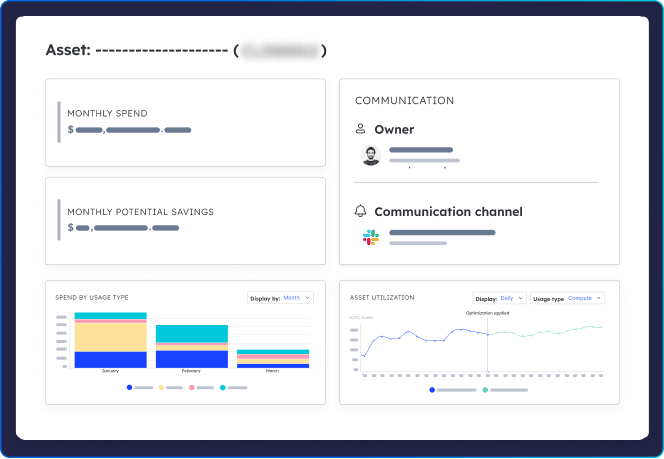
Automatic attribution demystifies the ownership problem. By inferring ownership from deployment patterns, repository history, IAM roles, and collaboration signals, it produces governance-ready attribution from day one, without a tagging project and without a maintenance burden. As organizations scale and engineer turnover increases, this approach becomes more accurate relative to manual tagging, which degrades with scale. Ownership of training datasets, retraining pipelines, and data quality alerts is known automatically. Cloud ex Machina (CxM) AI applies this same automatic attribution approach to cloud infrastructure ownership, inferring who owns a workload from deployment history and access patterns instead of relying on a tagging campaign, then proposing the resulting governance project as a scoped ticket for the owning team.

3. Structure Governance as Projects with Defined KPIs
The "continuous improvement" framing that dominates most governance programs is one of the primary reasons those programs don't produce measurable outcomes. When governance is perpetually in progress with no defined targets, there's no way to determine whether it's working.
Treating governance as structured projects changes this. Each project has defined targets (a lineage completeness rate, a tagging coverage threshold, and an audit readiness score) and measurable KPIs: policy violation response time, attribution coverage percentage, and retraining documentation completeness. Closed-loop verification confirms actions produced the expected result, not just that actions were taken. Engineering leaders need to answer, "Are we actually more compliant than six months ago?" That requires KPIs, not a list of initiatives in progress.
4. Build Cross-Functional Governance Ownership
AI data governance requires collaboration between engineering, security, legal, and data teams. These groups typically have different tooling, different vocabularies, and different escalation paths. A functional cross-functional structure needs:
- Shared tooling that gives all teams visibility into the same governance state, so compliance posture isn't siloed by department
- Clear escalation paths that don't require a manager-to-manager conversation to surface a critical issue
- Role-based ownership that doesn't collapse when individuals leave. When governance ownership lives in a person rather than a documented role with shared tooling, every departure creates a gap
Frequently Asked Questions About AI Data Governance Challenges
What are the biggest data governance implementation challenges at the enterprise level?
Enterprise implementations fail along four patterns:
- Over-scoped rollouts. Attempting to govern all data across all systems in a single initiative creates timelines measured in years and deliverables that are outdated by the time they're published.
- Workflow-disconnected tooling. Governance platforms that require engineers to leave their existing tools get ignored consistently.
- Absent KPIs. Implementations that can't answer "what does good look like?" can't demonstrate progress or identify what's working, which makes it impossible to sustain investment.
- Inadequate change management. Governance programs handed off as policy and training rather than embedded in tooling don't hold when initial attention fades.
The principle across all four: start with a bounded scope, embed controls in existing workflows, define measurable targets, and verify outcomes.
What compliance and governance issues does the EU AI Act introduce for data teams?
The EU AI Act imposes documentation, transparency, and human oversight requirements on high-risk AI systems that translate directly into data governance obligations. Organizations must maintain training data records detailed enough for regulatory assessment, document bias testing rather than just performing it, and establish verifiable human oversight mechanisms. Provenance documentation needs to be maintained as an ongoing artifact, not reconstructed on request, and bias testing records must capture what was tested, when, against what criteria, and what the results were.
How does automatic data attribution help address governance challenges?
Automatic attribution solves the ownership gap that manual tagging consistently fails to close at scale. Inferring ownership from deployment patterns, code repositories, IAM roles, and collaboration signals produces an ownership map that's accurate from day one, updates dynamically as teams change, and doesn't require dedicated maintenance. When ownership is known, accountability is possible. When attribution is manual and therefore incomplete, accountability collapses. Automatic attribution makes governance-ready ownership a continuous output of normal engineering activity.
The Path Forward for AI Data Governance
The core AI governance challenges (provenance gaps, data quality risk, retraining obligations, scale problems, and the compounding issues healthcare introduces) share a common root. Governance frameworks designed for a different data era don't automatically extend to AI workloads.
So what's the path forward? Unlock it by treating governance as an engineering quality discipline, not a compliance checkbox. Embed controls in the workflows engineers already use. Replace manual tagging with automatic attribution. Structure governance as measurable projects with defined KPIs. And build cross-functional ownership that survives personnel changes.
Teams that commit to this approach are the ones that can demonstrate compliance posture accurately and show progress rather than activity.
Cloud ex Machina (CxM) provides the workflow-native controls, automatic attribution through CxM Attribution, and KPI-driven project structure that makes governance observable and measurable from day one.
Book a demo to see how CxM embeds governance directly into the tools your engineers already use.