
A modern guide to SDLC phases, explaining how AI compresses the software lifecycle and the DevOps challenges of building apps with generative AI.
AI has not removed the SDLC; it has compressed it. Generative AI can now design architectures, write code, generate infrastructure, and deploy changes faster than traditional review cycles can keep up. For engineering leaders, the challenge is no longer understanding what the SDLC phases are—it is operating those phases responsibly when output scales faster than governance can keep up by default.
This guide reframes SDLC phases as an evolving engineering discipline. Rather than treating them as documentation milestones or waterfall artifacts, it shows how each phase functions as a risk-reduction and feedback mechanism in AI-accelerated environments, where cost, reliability, and security issues surface downstream if constraints are not defined early and enforced automatically.
Key Takeaways
- SDLC phases still exist—but they are non-linear, automated, and feedback-driven.
- AI compresses every phase, increasing speed while amplifying downstream risk.
- Most SDLC failures today come from missing constraints, not bad code.
- Cost, reliability, and security must be first-class signals, not post-release clean-up.
- High-performing teams encode SDLC intent into defaults, automation, and workflows, not meetings.
What Are the 7 Phases of SDLC? (Baseline Framework)
At a conceptual level, the SDLC phases remain consistent across methodologies, including Agile and DevOps. What has changed is how teams move through them.
Modern SDLC Phases Overview
|
SDLC Phase |
Core Purpose |
Modern Reality |
|
Planning |
Define intent and constraints |
Continuous, often implicit |
|
Requirements Analysis |
Clarify what must be built |
AI generates first drafts instantly |
|
Design |
Choose architecture and patterns |
Decisions become code immediately |
|
Development |
Implement functionality |
Output can scale significantly with AI — though gains vary widely by task type and developer experience |
|
Testing |
Validate correctness and behavior |
Faster, but less intuitive |
|
Deployment |
Release and observe changes |
Continuous and automated |
|
Maintenance & Optimization |
Sustain efficiency over time |
Never "catches up" without automation |
Across industry guidance—from cloud providers to DevOps platforms—these phases persist because they answer fundamental engineering questions: what problem is being solved, which constraints matter, how it will behave in production, and who owns the outcome? Modern SDLCs are characterized by being non-linear, feedback-driven, and highly automated.
Phase 1: Planning in the Age of AI-Accelerated Delivery
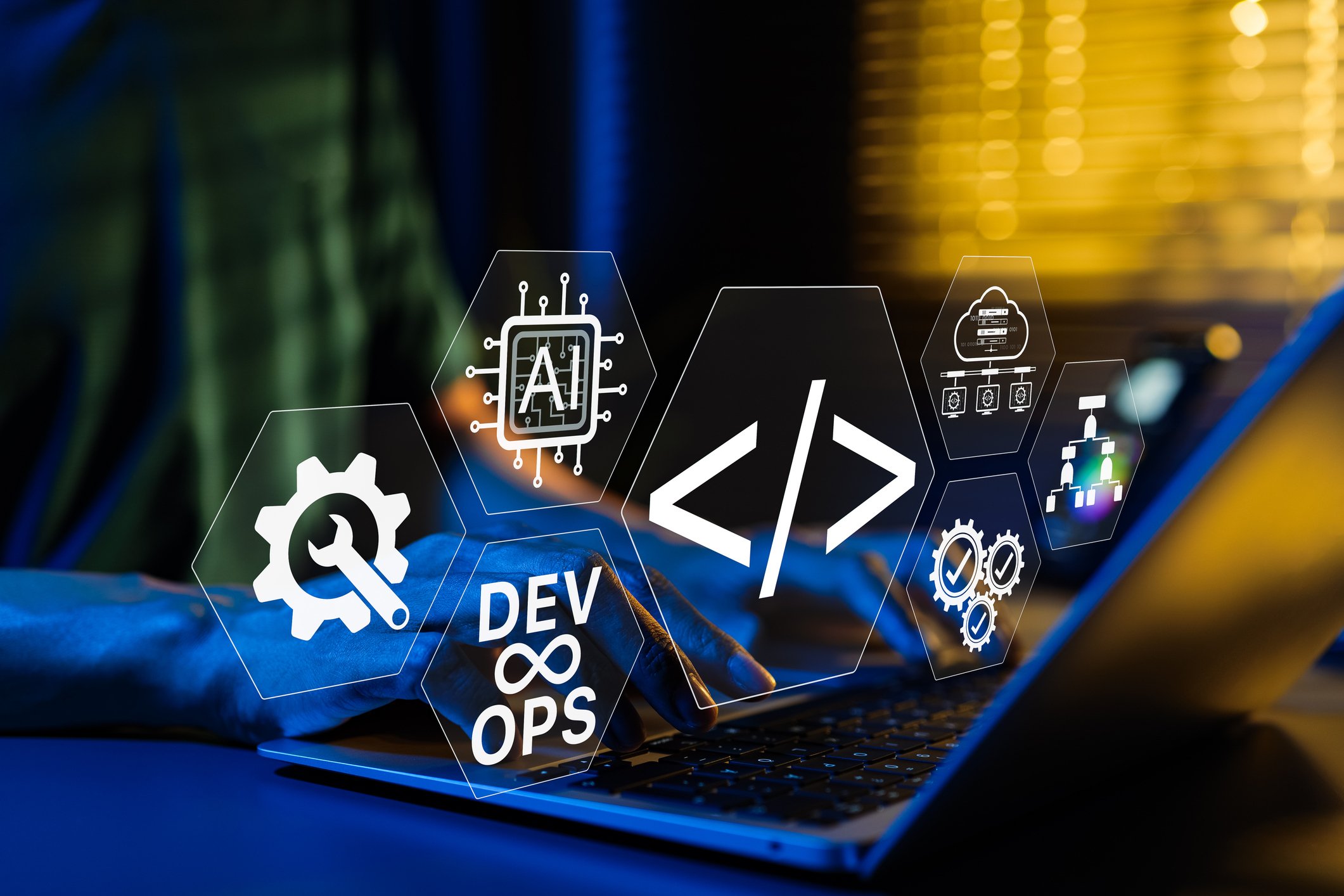
Planning is no longer a slow, front-loaded exercise but a continuously compressed activity shaped by AI-assisted ideation, instant backlog generation, and rapid architectural exploration. While this acceleration removes friction, it also removes the natural pause points where teams once evaluated tradeoffs around cost, reliability, and downstream operational impact.
Traditional Planning Goals vs. AI Realities
Historically, the planning phase reduced uncertainty by focusing on scope definition, resource estimation, timeline forecasting, and budget expectations. These activities forced early conversations about tradeoffs—what mattered most and where risk was acceptable.
Generative AI dramatically shortens this phase by assisting with architecture ideation and backlog creation in minutes rather than weeks. This speed enables teams to move faster, but increases the likelihood that planning outputs skip critical discussions. Faster planning results in fewer architectural tradeoff evaluations and less upfront cost modeling.
New DevOps Challenges
When planning compresses without constraints, DevOps teams inherit the consequences. AI-generated features may underestimate runtime cost, infrastructure requirements, or data movement. Teams often assume optimization can happen later, but AI-driven output compounds faster than manual cleanup can keep up, leading to cost spikes and reactive firefighting.
Developer-First Planning Habits That Scale
High-performing teams reframe planning as constraint definition rather than feature prediction. Instead of exhaustive documentation, they produce lightweight outputs that downstream automation can enforce, such as:
- Expected runtime characteristics: Define how the application should behave under load and its resource utilization limits. This ensures that downstream automation can flag performance anomalies before they reach production.
- Data volume assumptions: Establish clear expectations for storage needs and data processing throughput to prevent unforeseen infrastructure bottlenecks. These metrics provide the baseline for scaling policies and storage cost management.
- Environment sprawl expectations: Set boundaries on the number and type of temporary environments created to maintain control over ephemeral infrastructure. Managing these expectations prevents shadow IT and unmonitored cost leaks.
- Ownership boundaries: Explicitly assign responsibility for every resource to ensure accountability throughout the software lifecycle. Clear ownership allows for automated routing of remediation tasks directly to the responsible engineering team.
Phase 2: Requirements Analysis When AI Writes the First Draft
Requirements analysis has shifted from careful human synthesis to rapid AI-generated output, where functional completeness often arrives before operational clarity. AI can produce user stories, API contracts, and acceptance criteria in seconds, but it rarely accounts for scaling characteristics or cloud cost implications.
Traditional Requirements Analysis
Traditionally, this phase translated business intent into functional and non-functional requirements (performance, security, availability) and involved stakeholder validation. This acted as a vital checkpoint before implementation began.
The Hidden Risk for DevOps Teams in AI SDLC
Non-functional requirements—cost boundaries, scaling assumptions, and environment differences—quietly degrade in AI-generated outputs. AI does not naturally reason about cloud pricing models or data egress costs, leaving DevOps teams to discover these gaps after deployment.
Practical Habits for AI-Generated Requirements
Effective teams explicitly require cost boundaries and runtime expectations in every requirement artifact. They move away from static documents toward living constraints enforced later in CI/CD pipelines. Requirements that cannot be enforced eventually become production incidents.
Phase 3: System Design in a World of Infinite Options

System design is where AI acceleration creates the most irreversible decisions. With infrastructure-as-code (IaC) and AI-generated reference architectures, design choices no longer remain abstract—they materialize directly into deployed systems.
AI-Assisted Design: Faster, But Riskier
AI accelerates microservice decomposition and cloud service selection. However, defaults often skew toward premium services, over-provisioned resources, and expensive patterns. These choices appear safe but carry long-term complexity implications.
Designing for AI Speed vs. Traditional Architecture
|
Design Element |
Traditional Approach |
AI-Accelerated Habit |
|
Architectural Reviews |
Scheduled meetings and diagrams |
Policy-backed automated recommendations |
|
Service Selection |
Manual vendor/SKU comparison |
Template-based defaults with cost guardrails |
|
Debt Management |
Evaluated before code is written |
Continuous negotiation informed by feedback |
Design-Stage Guardrails That Don't Slow Teams
High-performing teams avoid the bottleneck of manual architectural reviews by encoding technical intent into automated systems. Design becomes a continuous negotiation informed by real-time production feedback, rather than a static, one-time artifact. To maintain velocity in an AI-accelerated environment, organizations should implement the following actionable guardrails:
- Encode Architectural Preferences as Defaults: Shift from manual reviews to automated checks by embedding cost-aware signals and configuration sanity into the initial scaffolding. This ensures that when AI generates a microservice decomposition, it automatically selects instance types that align with your performance-cost envelopes.
- Utilize Policy-Backed Recommendations: Rather than blocking developers with rigid gates, provide workflow-native recommendations in Slack or Jira that surface architectural debt before the first deployment. These recommendations should include specific implementation steps, such as rightsizing a service based on expected runtime characteristics defined during planning.
- Standardize through Templates: Provide developers with pre-approved IaC templates for common patterns, such as cloud service selection or microservice boundaries. This prevents AI from skewing toward expensive "safe" defaults or premium SKUs by providing a "golden path" that is already optimized for the organization's specific pricing models.
- Treat Design as a Cost-Performance Negotiation: Move away from static requirement documents toward living constraints that are enforced later in the CI/CD pipeline. By integrating cost and reliability signals early—without adding extra meetings—teams can evaluate operational complexity and architectural tradeoffs as the code is being written.
Phase 4: Development When AI Multiplies Output
Development velocity has fundamentally changed. AI writes boilerplate code, IaC, and even entire services, shifting the bottleneck from creation to control. The new level of output can vary, but some developers and engineers say their output has at least doubled, if not more.
New DevOps Failure Modes
AI-driven development introduces infrastructure sprawl, redundant services, and accelerated configuration drift. Resources are spun up and forgotten, and inconsistencies accumulate faster than teams can manually identify them.
Developer-First Controls That Actually Work
Manual review does not scale at AI speed. High-performing teams shift from manual reviews toward automated checks that embed cost awareness and configuration sanity directly into the engineering pipeline. To manage the increase in output generated by AI, developers should adopt these specific controls:
- Shift from Manual Reviews to Automated Checks: Implement automated guardrails that validate code and IaC against organizational policies in real-time. This prevents the accumulation of architectural debt and ensures that AI-generated boilerplate adheres to safety standards without requiring human intervention for every line of code.
- Embed Cost-Aware Signals into Pipelines: Integrate financial telemetry and cost boundaries directly into the CI/CD process. By surfacing the projected spend of a new service before it is provisioned, engineers can make informed architectural tradeoffs regarding premium SKUs versus more efficient patterns.
- Implement Configuration Sanity Checks: Use automated scanners to detect infrastructure sprawl, redundant services, and configuration drift before they reach production. These checks help mitigate the risk of AI-generated resources being spun up and forgotten, which is a primary driver of cloud waste.
- Generate Review-Ready Pull Requests: Ensure that AI-generated code produces pull requests that explicitly surface intent, ownership, and operational impact. By providing clear context and remediation paths within the PR, engineers can quickly verify impact and maintain high delivery velocity without sacrificing governance.
Phase 5: Testing in an AI-Heavy SDLC
Testing has become faster and more automated. AI excels at generating test cases, mocks, and synthetic data, dramatically increasing coverage while reducing manual effort.
AI's Impact on Testing
AI-generated tests increase speed but reduce intuition about edge cases. Automated scenarios often miss inefficiencies that only appear at scale or under real-world workloads.
Expanding the Definition of "Done"
Most tests still validate correctness, not efficiency. Modern testing must include performance-cost envelopes and environment-specific validation. A system that functions correctly but wastes resources should be treated as a failed test outcome.
Phase 6: Deployment in a Continuous, AI-Driven Pipeline
Deployment is no longer a discrete event—it is a continuous state. AI-driven pipelines enable constant delivery of small changes, reducing individual release risk while increasing overall system churn.
How AI Collapses Deployment Cycles
AI enables faster recovery and smaller deployments, but also accelerates waste accumulation and ephemeral infrastructure creation. Systems change continuously, often faster than teams can interpret signals.
Deployment Habits That Scale with AI
Effective teams tie deployments to ownership and intent, surface cost and usage signals in existing workflows, and favor guardrails over gates. Deployment becomes a learning loop rather than just a control point.
Phase 7: Maintenance, Optimization, and the Reality of AI Drift
Maintenance is where AI-driven systems either stabilize or spiral. Because AI continues to generate change long after deployment, optimization work rarely catches up if treated as periodic cleanup.
Why AI Makes Maintenance Harder
AI keeps shipping continuously, compounding inefficiencies invisibly. Optimization lags behind output, and waste accumulates faster than teams can address it manually.
From Reactive Cleanup to Proactive Habits
The modern challenge is not visibility—it is execution. High-performing teams treat optimization as continuous engineering work. They close the loop between detection, ownership, remediation, and verification, ensuring that speed compounds value instead of debt.
The Workflow Gap: Why SDLC Governance Fails in Production

Even when organizations successfully navigate the early SDLC phases, they often hit a "workflow gap" during the maintenance and optimization phase. Most teams are not suffering from a lack of data; they are overwhelmed by it. Traditional governance tools are built for visibility, not execution. They generate reports and dashboards that live outside the tools engineers actually use, creating a fundamental handoff failure.
The Traditional vs. Workflow-Native Remediation
|
Feature |
Traditional Governance |
Workflow-Native (CxM) |
|
Primary |
||
|
Interface |
Finance-oriented dashboards |
GitHub, Slack, Jira |
|
Attribution |
Manual tagging (often stale) |
Automatic ownership inference |
|
Fix Delivery |
Vague "Rightsizing" tickets |
AI-powered, review-ready Pull Requests |
|
Efficiency |
Reactive "Cleanup" projects |
Continuous engineering habits |
Turning “Spectatorism” into Action
Spectatorism happens when teams can clearly see problems—but lack a safe, fast path to act on them. Dashboards surface cost spikes, inefficient configurations, or underutilized resources, yet nothing changes because remediation feels risky, time-consuming, or poorly owned. In AI-accelerated SDLCs, spectatorism becomes more damaging because waste compounds faster than manual intervention can keep up.
Breaking this pattern requires shifting from awareness-first workflows to execution-first systems.
1. Convert Signals into Review-Ready Work
The fastest way to stall action is to present engineers with ambiguous alerts that require investigation before they can even decide what to do. Instead, every signal should arrive as review-ready work.
Actionable practices include:
- Translating findings into pull requests, not tickets
- Including blast radius, rollback strategy, and expected impact upfront
- Making the “safe path” the default option
If engineers must reconstruct context themselves, spectatorism is already winning.
2. Attach Ownership Automatically—Every Time
Action does not happen without ownership. In practice, manual tagging and documentation drift too quickly in modern environments.
Effective teams:
- Infer ownership from code repos, deployment history, and access patterns
- Route recommendations directly to the responsible engineer or team
- Make “who can act” obvious without requiring meetings or triage
When ownership is automatic, action becomes routine instead of political.
3. Reduce Remediation to Small, Reversible Steps
Large, risky changes discourage action—especially when teams are already shipping continuously. The goal is to make remediation boring.
That means:
- Favoring incremental changes over sweeping refactors
- Designing fixes that can be rolled back automatically
- Validating impact in lower environments before production
If the perceived risk of fixing an issue exceeds the risk of leaving it, teams will always choose inaction.
4. Embed Action Where Engineers Already Work
Context switching kills momentum. Insights that live in dashboards but actions that live elsewhere create friction by design.
High-signal teams:
- Deliver recommendations in GitHub, Jira, or Slack
- Let engineers act without leaving their primary workflow
- Preserve full context at the point of action
When action requires opening “one more tool,” spectatorism persists.
5. Close the Loop with Verified Outcomes
One of the biggest reasons teams disengage is that effort feels disconnected from impact. Fixes ship, but nobody knows if they mattered.
Actionable systems:
- Verify changes after deployment
- Feed results back to the original signal
- Show before-and-after impact clearly
When engineers can see that a fix worked—and why—it reinforces action as a habit, not a chore.
6. Treat Optimization as Engineering Work, Not Cleanup
Spectatorism thrives when optimization is framed as a periodic initiative rather than continuous work.
Teams that escape it:
- Schedule remediation alongside feature work
- Define success criteria upfront (not “reduce costs,” but how)
- Measure progress through outcomes, not alerts closed
Optimization stops competing with delivery when it is designed as delivery.
7. Make Action the Default, Not the Exception
Ultimately, spectatorism is a systems problem, not a motivation problem. Engineers are rarely unwilling to act—they are unwilling to guess, risk breaking things, or own ambiguous outcomes.
The fix is structural:
- Focus on execution, not observation
- Automate the boring parts of remediation to reduce the required bandwidth
- Let humans review decisions, not discover problems
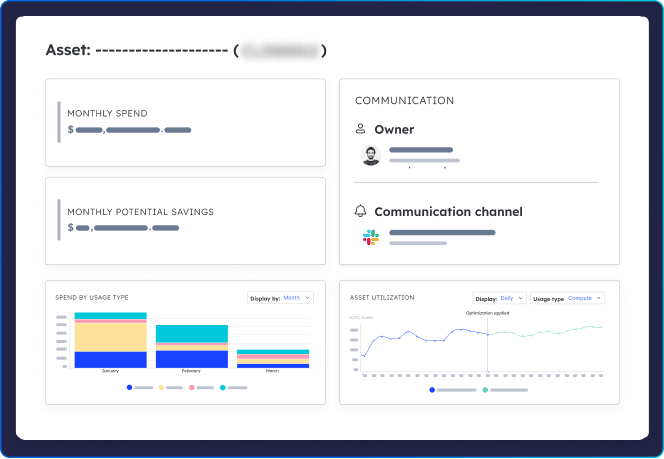
Cloud Ex Machina (CxM) is built specifically to close this gap. CxM identifies that your staging environment is running 24/7, maps it to the team that owns it, and proposes an auto-stop schedule as a PR to your Terraform repo — ready for an engineer or a coding agent like Amazon Q or Claude Code to review and merge. Optimization becomes something teams do, not something they watch.
If your teams can see the problem but cannot safely fix it, the system—not the people—needs to change.

Frequently Asked Questions About SDLC Phases
Are SDLC Phases Still Relevant with DevOps and AI?
Yes, these phases remain essential because they represent core engineering concerns—such as problem definition, constraint management, and ownership—rather than just linear process steps. While methodologies like Agile and DevOps have transformed the SDLC into a non-linear, feedback-driven cycle, the fundamental need to plan, design, build, test, and deploy software remains unchanged. In an AI-accelerated DevOps environment, these phases act as critical risk-reduction mechanisms that prevent assumptions from propagating into production incidents. AI makes these stages move faster, but it does not make them optional; it makes them easier to neglect, which increases the necessity of embedding them directly into automated workflows.
How Does AI Affect SDLC Governance?
AI fundamentally shifts the bottleneck of governance from creation to control. Because generative AI can increase an individual engineer's output by 2 and up to 10 times when processes are fully optimized for AI — overall team-level productivity gains may vary widely depending on the maturity and context — traditional human-scale review mechanisms like manual pull request approvals can no longer keep pace. This creates a "visibility-to-action gap" where teams can identify risks but lack the bandwidth to remediate them manually. Effective governance now requires shifting away from "ceremony-based" approvals and toward automated guardrails that enforce architectural preferences, cost boundaries, and security policies directly within CI/CD pipelines.
What Is the Biggest DevOps Risk in AI-Driven SDLCs?
The primary risk is unbounded, "shallow" output that lacks explicit constraints around cost, reliability, and ownership. When AI generates requirements and code instantly, teams often skip the "natural pause points" where architectural tradeoffs were historically debated. This leads to several failure modes:
- Infrastructure Sprawl: Redundant or over-provisioned services are spun up and forgotten.
- Configuration Drift: AI-generated IaC can introduce inconsistencies faster than manual reviews can catch them.
- Hidden Costs: AI rarely "thinks" in terms of cloud pricing models or data egress costs, leading to massive post-deployment spikes.
- Ownership Ambiguity: Without clear attribution, teams struggle to determine who is responsible for acting on a cost alert or a reliability failure.
How Can Teams Manage Cost Without Slowing Delivery?
The solution is to move away from reactive "dashboarding" and toward developer-first, workflow-native remediation. Instead of waiting for a monthly report from finance, cost awareness must be embedded as a first-class signal within existing engineering tools. This is achieved by:
- Defining Constraints Early: Treating planning as a negotiation of "performance-cost envelopes" rather than just feature prediction.
- Automated Guardrails: Encoding architectural preferences into templates and policy-backed recommendations so the "fastest" path is also the most efficient one.
- Closing the Loop: Using tools like Cloud Ex Machina to automatically infer resource ownership and deliver review-ready pull requests that fix inefficiencies directly in GitHub or Jira. This ensures that optimization becomes a byproduct of daily work rather than a separate, disruptive initiative.
Conclusion: From SDLC Intent to Real Execution
Understanding the SDLC phases is no longer the hard part; operating them safely at AI speed is. When planning assumptions disappear, requirements stay shallow, and AI multiplies output, cost and reliability issues arise from a lack of execution paths and ownership.
CxM turns SDLC intent into measurable results by helping teams:
- Map workloads and infer ownership automatically — no complete tag coverage required
- Identify rightsizing, zombie resources, and environment scheduling opportunities ranked by impact
- Propose a scoped plan that translates directly into Jira tickets or Terraform PRs — reviewed and merged by the responsible engineer
- Verify outcomes after deployment and close the loop back to the original signal
Instead of treating optimization as a separate initiative, CxM makes it part of how software is planned, built, deployed, and maintained—without slowing teams down. If your SDLC is moving faster than your guardrails, it is time to make execution automatic.
Book a demo today to get started.