
Cloud cost optimization is now a board-level priority as scaling environments often cause budgets to exceed limits by 17%. While cloud cost optimization tools are widespread, 27% of cloud spend continues to be wasted because insights rarely trigger safe, timely action. Traditional systems describe waste after the money is spent, leaving engineers with dashboards that raise questions rather than providing implementation-ready answers.
This article reframes efficiency as a developer-first discipline—similar to reliability or security—and examines how modern platforms embed optimization into daily workflows to close the delivery gap without slowing teams down.
Key Takeaways
- The Paradox of Data: More visibility has not translated into lower bills because the data remains disconnected from engineering workflows.
- Sophisticated Spectatorism: Organizations often become experts at documenting waste without having a systematic way to eliminate it.
- Developer-First Approach: Effective optimization requires delivering implementation-ready fixes directly into the tools engineers already use.
- Habit Formation: Long-term efficiency comes from changing engineering habits through repeated exposure to cost-conscious practices rather than periodic fire drills.
- Advanced Metrics: Success depends on measuring the speed of remediation and the level of engineering ownership, not just total dollars saved.
Why Traditional Cloud Cost Optimization Tools Stall
The cloud cost management industry is at an inflection point. While the market for optimization tools is growing at a CAGR of 17.2%, organizations continue to hemorrhage money on cloud waste. To understand why, we must look at how the market evolved and why legacy approaches fail to address the complexities of modern, distributed environments.
The Evolution of Cloud Cost Management Tools
|
Generation |
Representative Tools |
Primary Focus |
The Workflow Gap |
|
1st Gen: Independent Pioneers |
CloudHealth, Cloudability, Flexera |
Centralized dashboards, tagging strategies, and finance-led reporting. |
Disconnected from daily engineering operations; acts as a "bolt-on" financial system. |
|
2nd Gen: Attribution & Visibility |
CloudZero, Finout, Kubecost |
Unit economics, cost-per-feature, and granular multi-cloud attribution. |
Still dashboard-heavy; provides visibility without clear implementation or execution routes. |
|
3rd Gen: Autonomous Automation |
CAST AI, ProsperOps, Spot.io |
Machine-led rightsizing, autoscaling, and commitment management |
Often acts without developer context; "black-box" changes can erode engineering trust |
|
CxM: Workflow-Native Delivery |
Cloud ex Machina |
Scoped, context-rich fixes delivered into GitHub, Slack, and Jira. |
Closes the gap by treating efficiency as proactive engineering work instead of a finance report. |

The Visibility vs. Action Problem: The Attribution Trap
The second generation of tools operated on a seductive but flawed premise: if teams could see exactly what their services cost, they would naturally optimize them. This led to an "attribution trap," where teams spent months on tagging strategies and unit economics.
The primary failure of passive dashboards is their inability to trigger systematic action. Legacy systems were designed for finance and FinOps teams, not for the engineers who make the decisions that drive costs.
- Format Mismatch: Reports are delivered in formats and dashboards disconnected from daily engineering operations.
- The Cost-Performance Blind Spot: Traditional monitoring often lacks the real-time performance context required to prove a recommendation is safe. Engineers cannot confidently downsize a cluster without knowing if it will impact SLAs.
- Delayed Feedback: Monthly reviews occur long after infrastructure decisions were made, resulting in month-end surprises rather than proactive management.
Sophisticated Spectatorism
Teams often become "sophisticated spectators" who can describe their waste in detail but lack the systematic means to eliminate it. The visibility revolution gave organizations ways to categorize waste, yet 58% of surveyed companies in 2024 said their costs remain too high. Without a delivery mechanism that routes well-scoped work to the right engineers, insights simply accumulate in backlogs.
The Cultural Friction of "Bolted-On" FinOps
When FinOps is seen as a policing function rather than a collaborative discipline, it breeds tension between finance and engineering.
- "Bolted-on Homework": Traditional FinOps often feels like an administrative burden added after the work is done.
- The Nagging Cycle: Recommendations arrive via email or Slack as nagging reminders to revisit overruns, rather than being baked into the initial deployment workflow.
- Accountability Gaps: Without "cost-intelligent observability"—a unified view of cost and performance—engineers see cost reporting as someone else’s problem, and fail to see the immediate implications of their day-to-day decisions.
The Promise and Peril of Automation
Automation introduced autonomous optimization tools aimed at infrastructure action. While capable, they frequently introduced trust issues. Many engineering teams grew uneasy when systems altered production infrastructure without human oversight, as a single incident could destroy confidence entirely. Furthermore, automation often addresses symptoms rather than root causes; it can fine-tune what exists, but it rarely influences the upstream choices made during the design and provisioning phase.
What Engineers Actually Need for Cloud Cost Optimization
To solve the "workflow chasm," cost management must be reframed as an engineering discipline similar to security or reliability. Engineers do not naturally resist efficiency; they build systems optimized for performance and scalability constantly. However, for cost to become a priority in the software lifecycle, it must be presented in a way that respects the engineering mindset.
The Developer's Reality
Modern engineers manage a constant stream of GitHub notifications, pull requests, and automated alerts. Their primary motivations are delivering secure and reliable features according to specifications.
- Priority Alignment: Feature delivery and reliability are the top priorities; cost management is often seen as an external, monthly review that rarely intersects with daily operations.
- Urgency Gap: Security vulnerabilities or performance issues trigger immediate action because they impact users directly, whereas cost inefficiency is often "important but never urgent".
- Friction Avoidance: Engineers don’t have the responsibility to do work that feels like accounting or requires hours of detective work to identify root causes.
Contextualized Work
Recommendations must be implementation-ready. High-level financial analysis, like "reduce EC2 costs,” is effectively white noise to a developer.
- Technical Specifications: Instead of financial charts, engineers need specific configuration changes, such as a recommendation to switch an instance type while maintaining specific performance SLAs.
- Implementation Pathways: Effective engineering tools provide specific code diffs, upgrade paths, and risk assessments—similar to how security tools like Snyk operate.
- Lifecycle Awareness: Optimization should occur throughout the software lifecycle, from initial architectural design to deployment and continuous operations.
Shifting Left: Cost as Code
True "shifting left" means making cost awareness a proactive hygiene check rather than a post-mortem postscript.
- Pre-Deployment Feedback: Integrating cost feedback into Infrastructure as Code (IaC) and pull requests allows engineers to see the financial impact of a change before it is merged.
- Standardizing Instance Types: Engineers should use standardized, current-generation instance families to ensure better price-to-performance ratios and easier commitment management.
- Stateless Architectures: Designing for statelessness allows for the aggressive use of Spot instances, which can offer up to 90% savings versus on-demand pricing in some cases. Actual discounts vary by instance family, region, and availability.
Beyond Tagging: Automatic Ownership Mapping
Traditional resource ownership relies on clean and consistent tagging, which is difficult to enforce and often becomes obsolete as teams evolve.
- Inferred Responsibility: Modern solutions map cloud issues to team and service ownership automatically by analyzing service topology and code repositories.
- Eliminating Toil: By connecting runtime waste directly to the code that created it, engineers avoid the manual "chasing of owners" that characterizes traditional FinOps.
Proactive Resource Management
Engineers need tools that help them manage the dynamic nature of cloud resources without manual oversight.
- Autoscaling and Elasticity: Implementing horizontal and vertical pod autoscaling ensures that resources scale based on real-time demand rather than static, overprovisioned estimates.
- Lifecycle Policies: Automated policies for object storage (e.g., S3) should transition infrequently accessed data to cheaper storage tiers or delete old versions automatically.
- Environment Hygiene: Systems should provide proactive "off" switches for non-production environments during nights and weekends to eliminate waste for idle resources.
Choosing the Best Cloud Cost Optimization Tools for Your Organization
1. Continuous Opportunity Detection and Real-Time Visibility
Effective tools must monitor infrastructure, configurations, and scheduling constantly, rather than relying on daily or weekly scans that result in month-end surprises. This requires cost-intelligent observability—a unified layer that merges cloud cost data with real-time performance telemetry to ensure that any identified opportunity is backed by the performance context needed to prove the change is safe for production. By moving beyond batch processing, proactive systems can alert teams to sudden spikes in spend or unexpected resource provisioning before they escalate into significant budget overruns.
2. AI-Powered Remediation and Context-Aware Guidance
Look for tools that provide specific technical changes—such as Terraform modifications, YAML edits, or infrastructure-as-code patches—rather than high-level financial analysis. Every recommendation should arrive with metadata about the affected application, service, and environment, including performance validation data to show that response times or availability will stay within defined SLAs. For predictable tasks, the platform should recommend advanced strategies like designing for statelessness to leverage Spot instances.
3. Automatic Ownership Mapping and Scoped Workflows
Modern platforms must automatically map cost issues to specific teams and services by analyzing code ownership patterns, service topology, and deployment metadata, effectively eliminating the cumbersome dependency on manual tagging. Instead of sending broad waste reports to a general platform team, the system should route a scoped task directly to the specific backend engineer who owns the resource. This approach ensures that every optimization opportunity is contextualized for the person best positioned to act on it, preventing recommendations from languishing in backlogs due to ambiguity.
4. Workflow-Native Delivery and Integrated Engineering Cycles
The platform must deliver its findings into the tools engineers already monitor, such as GitHub pull request comments, Slack notifications, and Jira tickets, to ensure zero context switching. By integrating with Infrastructure as Code (IaC) pipelines like Terraform, the platform surfaces cost implications during the design and development phase before resources are even provisioned. Success is then measured through closed-loop verification, which proves the actual financial impact of every engineering action by tracking cost reduction against projected savings in real-time.
Mastering Usage with Cloud Optimization Software
Optimizing consumption is the most direct path to waste reduction, but it requires moving from one-time projects to continuous practices.
1. Rightsizing Workloads
Rightsizing matches instance types to actual performance requirements using historical telemetry.
- Beyond CPU Metrics: Tools must analyze historical utilization patterns, dependencies, and business criticality.
- Performance Validation: Any recommendation must prove that performance SLAs (e.g., P99 latency) will be maintained.
2. Idle Resource Remediation
Idle environments and unattached storage account for a massive portion of the 27% waste figure.
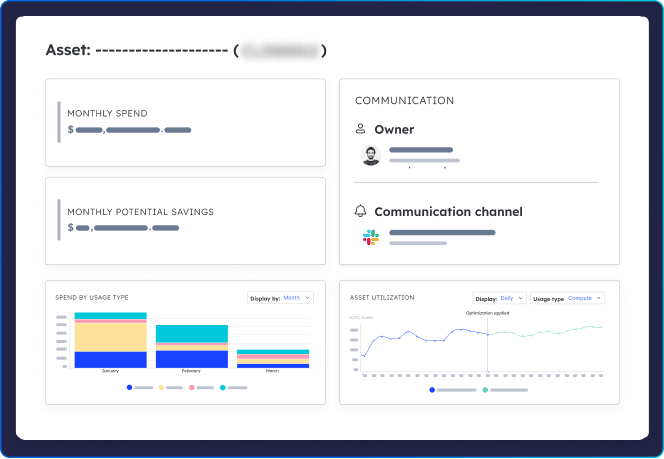
- Specific Interventions: Instead of "deleting resources," engineers should receive scoped tasks like "This analytics-dev environment has been idle for 12 days and costs $280/month".
- Business Justification: Engineers should have the option to take immediate action or postpone with a business justification, preventing tickets from simply languishing in the backlog.
This is exactly how Cloud ex Machina (CxM) surfaces idle resource waste: rather than a generic cost alert, engineers receive a scoped task tied to a specific environment — with the cost impact, the owner, and a proposed remediation path that the engineers can approve.
3. Environment Scheduling
Non-production resources often do not need to run 24/7.
- Proactive Guardrails: Automated systems can implement "off" switches for idle development environments.
- In-Flow Control: These schedules should be managed within the tools engineers already use, rather than requiring manual intervention in a cloud console.
Rate Optimization and Commitment Management
While usage optimization reduces what you consume, rate optimization reduces the price you pay for those resources.
Smart Commitment Planning
Traditional commitment planning relies on static spreadsheets, which cannot keep pace with dynamic scaling.
- Usage-Based Forecasting: Organizations must analyze workload patterns to predict commitment levels for Reserved Instances (RIs) and Savings Plans.
- Balanced Capacity: A healthy strategy blends on-demand and reserved capacity to balance financial savings and operational flexibility.
Commitment Groups
Organizing workloads into logical "commitment groups" helps maximize discount utilization across the organization.
- logical Grouping: Workloads or accounts are grouped based on shared billing profiles.
- Improved Utilization: This structure ensures that commitments are used efficiently across the business, reducing the risk of over-provisioning.
Pre-commitment Forecasting
Before making long-term financial commitments, teams must align their plans with architectural roadmaps.
- Architecture Alignment: Forecasts should account for planned migrations, such as moving from EC2 to Lambda or Kubernetes.
- Commitment Proposals: For predictable workloads (e.g., 4x c8g.4xlarge (Graviton4) instances running 99.8% uptime), the system should provide a clear ROI calculation and a proposal with a clear ROI calculation ready to be actioned — so the engineer makes the commitment decision with full usage context rather than peak-load guesses.
Configuration and Architecture Optimization
Design-level inefficiencies often represent the most significant "silent" waste in a cloud environment.
Fixing Expensive Defaults
Many inefficiencies stem from choosing high-performance configurations where standard tiers would suffice.
- Storage Optimization: Identifying oversized storage volumes or excessive EBS backup retention that exceeds compliance requirements (e.g., 30 days vs. 7 days).
- Architectural Alternatives: Evaluating if databases like RDS or compute like Lambda are the most cost-effective choices for a specific workload behavior.
Configuration Drift Detection
Cost optimization must be "shifted left" by catching misconfigurations in Infrastructure as Code (IaC) before they reach production.
- Early Prevention: Organizations can identify inefficiencies by testing infrastructure as it is written.
- AI-Generated Fixes: Systems can analyze existing Terraform or YAML files and generate the exact code modification required to reduce costs, such as changing a single line in a deployment file.
CxM applies this pattern at scale: it scans IaC continuously, identifies configurations that diverge from cost and compliance baselines, and proposes the exact code change so engineers can review and merge rather than investigate from scratch.
The Role of a Cloud Cost Optimization Partner in Enterprise Growth
For large-scale organizations, the goal is predictable scaling and redirecting engineering talent toward innovation.
Enterprise Scale Requirements
A true optimization partner must handle multi-cloud complexity across AWS, Azure, and GCP while integrating seamlessly with the enterprise identity stack. Organizations need a unified, automated layer that can map resource usage, metadata, and ownership across distributed environments, including Kubernetes clusters in EKS, AKS, or GKE. Furthermore, secure integration with enterprise identity providers like Okta or SSO is essential for maintaining centralized authentication, consistent identity mapping, and secure access control. This infrastructure allows the platform to infer ownership from deployment patterns and code repositories, ensuring that every dollar spent is justified and optimized.
The Business Case for Efficiency
Cloud cost management is not just about cutting bills; it is a critical driver for revenue enablement and long-term business growth. Organizations with efficient engineering cultures ensure that their infrastructure costs grow in line with business metrics rather than spiraling out of control due to operational complexity. By making cost a first-class metric, these companies can offer more competitive pricing to customers and make more aggressive technology investments.
Reinvesting Savings
The primary payoff for closing the workflow gap is the reclamation of engineering capacity for higher-value work. By eliminating the constant need for "cost firefighting," organizations can redirect their most expensive talent toward product innovation and market expansion. A typical enterprise wasting 27% of its $10M annual cloud budget is essentially burning $2.7M that could otherwise fund several new innovation projects. DevOps-integrated practices ensure that optimization happens in the flow of work, increasing overall engineering velocity and allowing the business to redirect spend toward growth instead of sustaining inefficiency.
Engineering-Led Remediation: The Cloud Optimization Platform of the Future

The industry is moving toward a delivery-native model where optimization is a byproduct of high-quality engineering.
AI-Powered Remediation
Machine learning goes beyond simple recommendations by generating tailored technical fixes.
- Contextual Code: The AI understands infrastructure context and organizational requirements to generate specific Terraform modifications and configuration updates.
- Developer Control: Engineers receive a complete pull request with technical rationale, allowing them to review, modify, and deploy through their standard processes.
Closed-Loop Verification
Trust is built by proving the impact of every action.
- Financial Validation: Platforms track the actual cost impact against projected savings for every implemented recommendation.
- Impact Tracking: This allows teams to feed wins back to FinOps and leadership, reinforcing the value of engineering-led action.
The Action Board
A strategic control center helps leaders set business-aligned KPIs and monitor progress across the entire portfolio.
- Operational KPI Tracking: Managers gain visibility into which engineers and teams excel at optimization without requiring separate reporting.
- Cultural Measurement: It measures the shift from "watching waste" to "eliminating waste".
Shifting Left: Integrating Cloud Cost Tools into DevOps
Integrating cost management into the software lifecycle ensures that efficiency is part of the "definition of done".
The CI/CD Integration
Catching cost spikes during the pull request phase is more effective than any monthly review.
- Pre-deployment Hygiene: Cost becomes an inherent design principle rather than an external constraint.
- Automated Feedback: Showing the cost impact of infrastructure changes before they are deployed naturally integrates into engineering decision-making.
Slack and Jira Workflows
Delivering fixes through operational hubs makes cost work feel like engineering work.
- Workflow-Native Interface: Engineers receive notifications with technical context and code diffs inside Slack.
- Systematic Prioritization: Jira tickets include specific pull request links and estimated effort, allowing them to be factored into standard sprint planning.
Terraform and IaC Alignment
Infrastructure as Code is the modern lever for cost control.
- Versioned Efficiency: Optimization suggestions are presented as version-controlled code changes, ensuring that the source of truth remains updated.
- Preventative Guardrails: Catching misconfigurations in IaC prevents inefficient resources from being provisioned in the first place.
In 2025–2026, a growing share of Terraform, CloudFormation, and Kubernetes manifests are generated using AI coding agents — Claude Code, Cursor, Copilot, etc. And the velocity keeps increasing, meaning the volumes of code and infra is growing faster than teams can review. This makes shift-left cost governance more urgent, not less: when an agent generates a misconfigured resource definition and it merges unreviewed, the cost lands silently in production.
Top Habits for Sustainable Software Cost Optimization
Long-term success relies on changing habits rather than imposing one-time mandates.
1. Look Beyond "One-Time Fixes"
Sustainable progress in cloud efficiency is built on a foundation of continuous monitoring rather than periodic audits. Because cloud environments are dynamic, waste tends to accumulate quietly the moment a cleanup project ends. Continuous opportunity detection acts as the fundamental driver for changing habits by surfacing new inefficiencies as they emerge in real-time. When engineers interact with these recommendations as a standard part of their daily routine, they move beyond one-off fixes and begin to balance performance with cost naturally.
2. Build Cost Intuition
Developing a deep sense of cost literacy requires repeated exposure to scoped, actionable tasks that demonstrate the financial impact of technical decisions. This repeated interaction refines an engineer's decision-making skills, prompting them to consider cost implications during the initial architecture planning phase rather than treating it as a post-mortem concern. Leading organizations support this by treating cost as an operational metric on par with performance or security, effectively embedding it into the core engineering lifecycle. This transformation ensures that cost consciousness is not merely a policy mandate but a fundamental design principle.
3. Use Positive Reinforcement
Direct feedback is essential for reinforcing the behavioral shifts required for long-term cloud efficiency. By utilizing data to celebrate wins, organizations can clearly demonstrate the connection between specific technical optimizations and broader business outcomes, which significantly boosts developer confidence. This transparency allows for the integration of cost efficiency into performance reviews through metrics like the Engineering Cost Ownership Index, making it a natural part of career development conversations. Such positive reinforcement ensures that engineers see the immediate value of their contributions to the company's financial health.
Identifying the Right Cloud Cost Optimization Services for Your Scale

The maturity of your engineering team should dictate your choice of cloud cost optimization services.
Scale-ups vs. Enterprise
- Scale-ups: Often benefit from workflow-native platforms that allow small teams to move fast without a dedicated FinOps staff.
- Enterprises: Require sophisticated ownership mapping and multi-cloud support to handle thousands of developers and millions in spend.
Managed Service Providers vs. Native SaaS
- Automated Platforms (SaaS): Ideal for teams that want to embed efficiency directly into their existing engineering workflows and keep developers in control.
- Managed Services (Consultancy): Can be useful for one-time deep-dives, but often lack the continuous integration needed for sustainable, everyday optimization.
KPIs for Success: Measuring Your Cloud Cost Optimization Solution
To gauge progress, executives must look beyond total dollars saved to how the organization is changing its habits. Traditional financial reporting tells you what you spent; the following KPIs tell you how effectively your teams are preventing waste.
|
Metric |
Definition |
Success Indicators & Benchmarks |
|
Optimization Velocity |
Measures the time elapsed from the moment an optimization opportunity is identified to its verified implementation in production. |
Target: Remediation within days rather than weeks. High velocity indicates that cost work is effectively integrated into standard sprint cycles. |
|
Engineering Cost Ownership Index |
Tracks the percentage of engineering teams that actively manage cloud cost as a first-class operational KPI within their standard development process. |
Target: >80% team engagement. Success is defined by teams proactively bringing cost considerations to architecture reviews without being prompted by Finance. |
|
Waste Prevention Rate |
Quantifies the financial value of inefficiencies (such as oversized instances or expensive storage tiers) caught and corrected during the development or "shift-left" phase. |
Target: A high percentage of potential waste is avoided before code is merged. This proves that developers are using cost literacy to design for efficiency from the start. |
|
Cost Efficiency Score |
A composite score measuring realized savings against total "optimizable" spend, reflecting the overall maturity of the FinOps program. |
Target: Consistent improvement from a "Crawl" baseline (approx. 60%) to a "Run" state (>85%) where infrastructure costs scale predictably with revenue. |
Conclusion: Turning Efficiency into a Durable Advantage
The cloud cost management industry is moving away from the era of "observability" and into the era of "delivery". Organizations that remain trapped in the cycle of "sophisticated observation" will continue to overrun budgets by an average of 17% (as indicated in the Flexera 2025 State of the Cloud Report).
Closing the workflow gap—shifting cost optimization left into engineering workflows—is the only way to achieve sustainable results. By delivering implementation-ready fixes to specific engineers inside the tools they already use, organizations transform efficiency from a manual burden into a continuous competitive advantage.
CxM maps workload ownership without requiring complete tag coverage, identifies your highest-impact waste across usage, rate, and configuration, and proposes remediation plans that land directly in Jira or your Terraform repo as PRs. Book a demo to see how CxM turns cloud cost data into engineering action.