

The Azure vs AWS debate is one of the most searched questions in cloud infrastructure. It’s important to look at your choice not from the perspective of which one is better than the other, but which will work best with your current team and the systems and processes you already have in place.
Your existing licensing, your identity infrastructure, your team's operational experience, and the cloud credits in your account will do more to determine the right platform than any capability head-to-head comparison. And once you've chosen, the cost management challenge waiting on the other side looks almost identical regardless of which platform you land on.
Key takeaways
- AWS launched in 2006 and built a developer community around composable, granular services. Azure arrived in 2010 with deep enterprise ties and Microsoft identity integration. Both origins still shape how each platform behaves at scale.
- For most service categories (compute, storage, databases, AI), the right choice follows your existing toolchain, licensing agreements, and operational context.
- Organizations with Microsoft enterprise agreements should factor Azure Hybrid Benefit into any cost comparison. It often makes Azure meaningfully cheaper for Windows Server and SQL Server workloads before any commitment discounts are applied.
- Both platforms provide solid native cost management tooling, but both rely on manual tagging for attribution. At scale, tagging coverage degrades, and attribution becomes a platform-agnostic problem neither AWS nor Azure fully solves.
- The best decision framework isn't Azure vs AWS in the abstract. It's what your team already knows, what licenses you already hold, and what credits you've already purchased.
AWS vs Azure: How the Two Platforms Got Here
To understand the Amazon AWS vs Microsoft Azure conversation today, it helps to know how both platforms got to where they are now.
AWS launched in 2006, and it invented the modern Infrastructure as a Service (IaaS) model in the process. Amazon's internal infrastructure team had been building distributed, scalable services in the e-commerce space for years. When they opened that infrastructure to external developers, they prioritized granularity and composability by giving developers the building blocks and letting them decide how to assemble them. That philosophy has since attracted a massive developer community. It also produced the industry's broadest cloud service catalog and a usage-based pricing model that rewards precise engineering.
Azure arrived in 2010, but its starting point was very different from AWS's. Microsoft already had deep relationships with enterprise IT departments with Windows, Office, SQL Server, and Active Directory. Azure's value proposition from day one was integration-focused, with the idea that organizations could bring their existing Microsoft infrastructure into the cloud with minimal friction. Their existing foothold in regulated, compliance-heavy industries (financial services, healthcare, and government) also shaped how they built Azure’s security and governance tooling, how it approached identity, and why enterprises running Microsoft workloads found it so easy to extend what they already had.
Those origins still define how each platform behaves at scale, and they're often the clearest signal for which one is a natural fit.
Azure vs AWS Summary
|
Provider |
Founded |
Market Share (Q1 2026)\* |
Global Regions |
Primary Strength |
|
AWS |
2006 |
~28% |
39 geographic regions |
Developer ecosystem, service breadth, composability |
|
Microsoft Azure |
2010 |
~21% |
70+ regions worldwide |
Enterprise integration, Microsoft licensing, identity |
- Source: Statista
Compute, Storage, and Databases: Letting the Workload Decide

Rather than comparing every AWS and Azure service side by side, the goal here is to guide you to the right choice for your use case. For most teams, that comes down to what their workload requires and what their existing toolchain already supports.
Compute: Instance Flexibility vs Licensing Savings
The broadest selection of instance types in the industry is one of AWS EC2's defining advantages, but it only matters if you need it.
AWS EC2 suits teams building from the ground up. If you're optimizing at the hardware level, need a specific GPU configuration for ML workloads, or want the flexibility to mix instance families across a complex architecture, EC2's catalog gives you more to work with. AWS also offers the widest range of processor architectures, including Graviton-based ARM instances that consistently deliver better price-to-performance for general compute workloads.
On the other hand, Azure Virtual Machines offer a more compelling case for organizations that already have Microsoft enterprise licensing. Azure Hybrid Benefit allows organizations to apply their existing Windows Server and SQL Server licenses to Azure VMs, reducing compute costs meaningfully (often 40% or more) without any architectural changes. If that licensing context exists, it frequently makes Azure the more cost-effective compute choice for those workloads before any other factor enters the comparison.
Before you compare EC2 and Azure VMs on specs, check one thing: does your organization hold existing Windows Server or SQL Server licenses? If yes, Azure Hybrid Benefit changes the cost math before any other factor enters the equation. If not, AWS EC2's instance flexibility and Graviton's price-to-performance ratio are the stronger default for most general compute workloads.
Storage: Match the Pricing Model to the Access Pattern
Amazon S3 and Azure Blob Storage offer comparable durability, with both targeting 99.999999999% (eleven nines). The practical differences come down to ecosystem and access patterns.
S3 has a wider third-party ecosystem. If your data pipeline involves tools outside the AWS and Azure ecosystems, S3 integration support is nearly universal. Azure Blob Storage's tiering model (Hot, Cool, Cold, and Archive) is competitive for teams managing large volumes of data with varying access frequencies and can produce lower total storage costs than S3's equivalent tiers for predictable data lifecycle patterns.
For block storage, EBS io2 is well-suited for high-IOPS workloads with no Azure dependency. Azure Ultra Disk Storage integrates tightly with Azure VMs and AKS. If you're running a Kubernetes workload entirely on Azure, the integration simplicity matters more than the raw throughput specs.
|
Workload Type |
AWS Service |
Azure Equivalent |
Best Fit Scenario |
|
Object / blob storage |
Amazon S3 |
Azure Blob Storage |
S3 for ecosystem breadth; Blob for tiered data lifecycle management |
|
Block storage (high IOPS) |
EBS io2 |
Azure Ultra Disk Storage |
EBS for standalone high-IOPS; Azure Disks when running on AKS or Azure VMs |
|
Archive / cold storage |
S3 Glacier |
Azure Archive Blob |
Either; follow your existing platform |
|
File storage (shared NFS) |
Amazon EFS |
Azure Files |
EFS for Linux workloads; Azure Files for Windows-integrated environments |
|
CDN + global delivery |
CloudFront + S3 |
Azure CDN + Blob |
Follow your primary compute platform |
Databases: Engine Compatibility and Stack Context
The right database service follows your engine, your migration path, and your BI toolchain.
Use this sequence to find the right starting point:
- Start with your migration source. Teams moving SQL Server workloads from on-premises will find Azure SQL Database the lower-friction path, especially when Azure Hybrid Benefit licensing applies. Teams running open-source engines (PostgreSQL, MySQL, and MariaDB) with no existing Microsoft footprint will generally find AWS RDS or Aurora more flexible. Aurora in particular offers MySQL and PostgreSQL compatibility with managed scaling that's hard to match without significant operational overhead.
- Match your NoSQL pattern to the service model. DynamoDB suits key-value and document workloads with predictable, single-digit millisecond latency at scale. Cosmos DB is stronger when you need to consolidate multiple data models (document, graph, key-value, and column-family) into a single managed service.
- Follow your BI tooling for analytics. If the team uses Power BI and Azure Data Factory, Synapse integrates more naturally. If the pipeline runs through S3 and Glue, Redshift keeps the architecture on a single platform, avoiding cross-platform egress costs.
AI Services: Governance Requirements and Model Flexibility
The platform decision for AI workloads comes down to two practical questions:
- How much governance is required around model access?
- How much flexibility is needed in model selection?
Teams with regulated workloads that require enterprise data privacy controls for AI should evaluate the Azure OpenAI Service, which provides GPT-5-class models with data residency and privacy guarantees. As of mid-2026, OpenAI's frontier models are also available directly on Amazon Bedrock with equivalent IAM, VPC, and encryption controls, so the choice increasingly comes down to which cloud already hosts the rest of your identity and governance stack, not which one can reach OpenAI's models at all. For healthcare, financial services, and government workloads where model data handling has compliance implications, this distinction is important.
Teams that need flexibility across model providers or want to avoid architectural dependency on a single model vendor should evaluate AWS Bedrock. As of mid-2026, it provides API access to Anthropic Claude, Meta Llama, Mistral, Amazon Nova, and OpenAI's GPT models through a unified interface, useful for teams that want to experiment across models or hedge against pricing and deprecation risk.
For MLOps lifecycle management (experiment tracking, training, deployment pipelines, and monitoring), SageMaker and Azure Machine Learning are functionally comparable. The choice should follow whichever platform the rest of the data stack is already running on. Cross-platform MLOps pipelines introduce operational complexity that rarely pays for itself in feature differences.
AI Use Case and Service Choice Summary
|
Use Case |
AWS Service |
Azure Service |
Best Fit Scenario |
|
Enterprise foundation model access with data privacy |
Amazon Bedrock (OpenAI and Claude) |
Azure OpenAI Service |
Both platforms now host OpenAI's models directly; choose based on where your governance and identity stack already lives |
|
Multi-model access and model flexibility |
Amazon Bedrock |
Microsoft Foundry |
Bedrock for teams avoiding single-model dependency |
|
Full MLOps lifecycle management |
Amazon SageMaker |
Azure Machine Learning |
Follow whichever platform your data stack runs on |
|
Vector search and retrieval-augmented generation |
OpenSearch + Bedrock |
Azure AI Search |
Follow your primary platform |
|
Real-time AI inference at the edge |
AWS Inferentia / SageMaker Endpoints |
Azure AI Inference |
Follow GPU instance availability and existing platform |
DevOps, Identity, and Cost Management: Where Your Team Already Operates
Developer Tooling: Follow the Workflow
Both AWS and Azure support the same major third-party DevOps tools. The differentiator is how well each platform integrates with the tooling your team already uses.
Terraform supports both platforms natively and is the most common IaC choice for teams that want to avoid platform lock-in. If your team is already using Terraform, it's not a meaningful differentiator in the AWS vs Azure decision. Teams weighing IaC licensing could also consider OpenTofu, the community-governed, MPL-licensed fork of Terraform under Linux Foundation stewardship; it supports both AWS and Azure equally and sidesteps Terraform's post-1.5.x BSL terms. Increasingly, a meaningful share of the Terraform and Bicep changes hitting either platform are drafted by AI coding agents rather than typed by hand, which raises the stakes on reviewing IaC changes for cost and compliance impact before they merge, regardless of platform.
Teams heavily invested in GitHub Actions within a Microsoft-integrated environment (Azure Entra ID, Azure DevOps, or Microsoft 365) will find Azure's native developer tooling more cohesive. Teams building complex AWS networking architectures with multi-account setups or VPC-heavy designs will find AWS-native tooling easier to reason about, with deeper documentation coverage for networking edge cases.
Identity: Granularity vs Governance Simplicity
Identity is one of the clearest signal categories in the Azure vs AWS decision, and the right answer almost always comes from the infrastructure you already have. To find it, work through these three questions in order:
- Does your organization already use Microsoft Entra ID for workforce identity? If yes, Azure is the natural fit. Integrating cloud resource access with your existing identity stack simplifies governance considerably. Role assignments map to organizational roles, conditional access policies extend to cloud resources, and audit trails connect to the same workflows used for SaaS access reviews.
- Do your security requirements call for fine-grained permission policies at the API action level? If yes, and your team has the operational maturity to manage that complexity at scale, AWS IAM gives you control that's hard to match. You can scope permissions to specific roles, specific API actions, and specific conditions. But IAM permission debt accumulates quickly, and auditing it across dozens of teams and hundreds of services is a significant ongoing effort.
- Are you starting from scratch with no existing identity infrastructure? If so, the choice depends on where the rest of your stack is heading. Teams standardizing on Microsoft tooling should lean toward Entra ID. Teams building a cloud-native environment with no Microsoft context should lean toward IAM and plan for the governance overhead early.
Building a second identity stack to satisfy a platform preference is rarely worth the operational cost.
Cost Management: What Native Tools Cover and Where They Stop
AWS Cost Explorer and Azure Cost Management both provide historical spending analysis, budget alerting, anomaly detection, and forecasting. Both have improved significantly in the past few years, and for most teams at early-to-mid scale, the native tooling is sufficient to understand what's being spent.
But both platforms hit the same structural limit at scale: they rely on manual tagging for cost attribution, and tagging coverage degrades as infrastructure grows.
Tags require discipline to apply consistently. They require enforcement policies to maintain. And in any organization where infrastructure is provisioned by multiple teams across multiple accounts, the tag coverage that looks complete on day one has usually decayed significantly by day 90. Resources get deployed without tags. Tags get applied inconsistently. Naming conventions drift. And the cost allocation views in both AWS Cost Explorer and Azure Cost Management start reflecting that entropy. Spending attributed to "untagged" grows, and the question of who owns which cost driver becomes genuinely hard to answer.
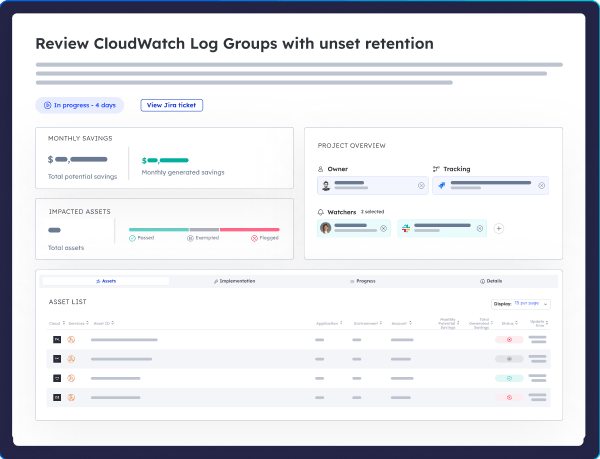
This is a platform-agnostic problem. Choosing AWS over Azure, or vice versa, doesn't change the underlying dynamic. Native tools surface what was spent. They don't resolve who owns it at scale. This is where a cross-cloud attribution layer earns its keep. Cloud ex Machina (CxM), for instance, maps resource ownership across both AWS and Azure without depending on manual tag coverage, and proposes remediation as a scoped ticket or Terraform PR for the engineer who owns the resource, rather than another dashboard for the FinOps team to chase.

Commitment Discounts: Credits, Licensing, and Term Flexibility

Both platforms offer substantial discounts (typically 30 to 70% off on-demand pricing) through reserved capacity programs. But the practical differences are context-specific.
Organizations with existing Microsoft enterprise agreements should calculate Azure Hybrid Benefit before making any commitment discount decision. It applies to Windows Server and SQL Server workloads and stacks with reserved pricing for eligible resources. For organizations with meaningful Windows or SQL Server footprints, the combined discount can make Azure meaningfully cheaper for those workloads before any additional negotiation.
AWS Savings Plans offer more flexibility for teams whose workloads don't fit a stable, predictable capacity pattern. If you're in a growth phase where instance requirements are changing, Savings Plans let you commit to a spend rate rather than a specific configuration, which is more forgiving than Reserved Instances, which lock in deeper discounts but require accurate capacity forecasting.
One consideration that often gets overlooked is existing cloud credits. If your organization has a large number of AWS credits from an Activate agreement or Azure credits from a Microsoft startup or investment program, those are a sunk cost. Burn them before making long-term architectural commitments on the other platform. The financial advantage of unused credits almost always outweighs marginal service differences between the two platforms.
Azure vs AWS: Which is Better for Your Team
The right platform depends on your workload, your team's existing skills and toolchain, your organization's compliance requirements, and what you've already paid for. Here are the clearest decision signals.
Consider Azure when:
- Your organization runs Microsoft infrastructure and can apply Azure Hybrid Benefit to reduce compute and SQL Server workload costs.
- AI workloads require enterprise data governance, and your identity and compliance tooling is already on Azure, since Azure OpenAI Service still offers the deepest native integration with Entra ID and Microsoft's compliance stack.
- Your team is already using Azure DevOps, Entra ID, or GitHub Actions in a Microsoft-integrated environment.
- Azure credits from a Microsoft investment, startup program, or enterprise agreement need to be consumed before they expire.
- You're migrating SQL Server workloads from on-premises and want the lowest-friction path to cloud.
Consider AWS when:
- Your team is building from first principles with no existing Microsoft licensing context.
- Your architecture requires maximum flexibility in instance types, networking configurations, or AI model selection.
- Existing AWS credits from an Activate program or enterprise agreement are already in place.
- Fine-grained IAM policy control at scale is a security requirement, and your team has the operational maturity to manage it.
- Your workload relies heavily on open-source database engines where AWS RDS or Aurora offers more configuration flexibility.
|
Scenario |
Recommended Platform |
Primary Reason |
Key Consideration |
|
SQL Server on-premises migration |
Azure |
Lower friction, Hybrid Benefit licensing |
Verify SQL compatibility mode requirements |
|
Net-new SaaS build, no Microsoft context |
AWS |
Ecosystem breadth, instance flexibility |
Evaluate Graviton for price-to-performance |
|
AI workloads with data privacy requirements |
Azure or AWS |
Both now offer governed OpenAI model access |
Choose based on where your existing identity and compliance tooling lives, not model availability alone |
|
Multi-model AI / avoiding vendor lock-in |
AWS |
Bedrock's multi-model API access |
Factor in model pricing differences |
|
Organization-wide Microsoft identity (Entra ID) |
Azure |
Native identity integration |
Evaluate Conditional Access policies |
|
Complex custom networking / multi-account |
AWS |
Deeper AWS networking tooling and docs |
Plan IAM governance model early |
|
Existing cloud credits (either platform) |
Whichever has credits |
Sunk cost; burn them first |
Don't split architectures to use both |
Building Cost-Conscious Habits Across Azure vs AWS
The aws vs azure comparison is ultimately about organizational fit. Neither platform is objectively better. The decision is almost always made correctly when teams start from what they already have.
Existing licensing, team expertise, identity infrastructure, and cloud credits already purchased are the most reliable inputs to the platform decision. The service-level differences between AWS and Azure, real as they are in specific categories, matter less than those organizational factors in most scenarios.
But here's where both platforms converge on the same challenge: cost management. Once you've picked a platform and started building, both AWS and Azure will give you visibility into what you spent. AWS Cost Explorer and Azure Cost Management surface spending by service, region, and account. But as infrastructure grows and teams multiply, the attribution layer (who owns which cost driver, which team is responsible for which resource) degrades faster than most organizations expect.
Manual tagging requires consistent discipline across every team, every environment, and every deployment pipeline. In practice, it doesn't hold. And when tag coverage degrades, the cost allocation views in both platforms start reflecting that entropy: spending attributed to "untagged" grows, and the question of who owns what becomes genuinely hard to answer.
This is a platform-agnostic problem. Choosing AWS over Azure doesn't change the underlying dynamic, and neither does choosing Azure over AWS.
The teams that manage cloud costs effectively on either platform do two things differently. They treat cost attribution as an engineering discipline rather than a finance reporting function. And they route optimization work through the same channels as any other engineering task: into Jira, into GitHub, into Slack, not into a separate dashboard that engineers have to go check. Cloud cost work that requires a context switch is cloud cost work that gets deprioritized.
Whatever platform your team chooses, the habits that close the gap between a flagged cost issue and a deployed fix will matter more over time than any service comparison this article can offer.
That's where Cloud ex Machina (CxM) comes in. CxM works across AWS and Azure, continuously monitoring your cloud infrastructure, mapping resource ownership without relying on manual tags, and routing ready-made remediation plans directly to the engineers responsible. Your team reviews and approves. The waste gets fixed.
If you're ready to close the gap between what your cost tools surface and what your team actually acts on, see how CxM works.