
The AWS Enterprise Discount Program (EDP) is one of the most powerful—but often misunderstood—levers for controlling cloud costs at scale. More than just a cloud pricing agreement, EDP provides multi-year financial predictability, deep discounts, and strategic access to AWS resources. However, to truly unlock its value, organizations must move beyond procurement and treat EDP as part of their cloud optimization strategy.
In this guide, we break down how EDP works, who it’s for, how to negotiate effectively, and how to combine it with Savings Plans, Marketplace spend, and automated tooling to maximize ROI across engineering, finance, and operations.
What Is AWS EDP?
The Amazon EDP is a private, contractual agreement between AWS and large-scale customers, offering significant pricing incentives in exchange for long-term commitments to cloud spend. Designed for organizations with large and predictable workloads, EDP enables better budget planning, deeper service discounts, and more substantial alignment with AWS account teams.
Note: AWS now refers to these agreements as Private Pricing Agreements (PPAs) — the terms are functionally identical, and EDP remains the widely used term, but you'll encounter both when working with AWS account teams.
How EDP Works (The Basics)
The AWS EDP is a volume-based discount model. While organizations spending $1M+ annually may qualify to enter the program, meaningful discount tiers typically begin at $5M per year. The customer agrees to a minimum annual or total spend commitment over a 1-5 years term, with 3-year terms being most common. In return, AWS offers tiered discounts, typically ranging from 5% to 20%, depending on the size of the commitment and the services utilized.
These discounts apply to a broad range of AWS services and are layered on top of existing pricing models, including Reserved Instances (RIs), Savings Plans, and Spot Instances. Many organizations also negotiate additional incentives, like access to dedicated support engineers or migration funding, as part of their EDP deal.
The key benefit is predictable pricing, which is a significant upside for enterprises actively scaling their cloud infrastructure.
Eligibility Requirements
Not every AWS customer qualifies for the EDP. The program is designed for enterprises with substantial annual spend—typically $1 million or more. Beyond raw spend, AWS also looks for:
- An enterprise-level account structure, with consolidated billing across departments or business units.
- A dedicated AWS sales or account management team to help negotiate, manage, and support the EDP agreement.
- Mandatory AWS Enterprise Support enrollment for all linked accounts — support fees (up to 10% of monthly usage for lower spend tiers) must be factored into your net savings calculation before committing.
- A growth trajectory: AWS EDP is best suited for organizations with steady or expanding usage patterns, including:
- Kubernetes and container orchestration at scale
- AI/ML training or inference workloads
- Data lake, analytics, and ETL pipelines
- SaaS platforms serving global user bases
For companies meeting these criteria, EDP becomes a strategic financial tool—not just a discount, but a way to align cloud investments with long-term business growth.
Why Organizations Choose Amazon EDP

The Amazon EDP is a strategic tool for financial planning, engineering velocity, and enterprise alignment. Here’s why growing organizations commit to it.
Predictable Costs and Budget Planning
Cloud bills are inherently variable, often fluctuating due to traffic spikes, workload shifts, or rapid product growth. EDP brings stability to this volatility by locking in discount rates and annual spend commitments, typically over a 1-5 years term, with 3-year terms being most common. This allows both engineering and finance teams to forecast with precision, align budgets with business initiatives, and prevent last-minute surprises during quarterly reviews.
For example, a SaaS company scaling into new markets can model its cloud spend as a fixed line item, giving CFOs the confidence to invest in R&D, go-to-market efforts, and AI/ML infrastructure without fear of budget overruns. With committed pricing, cost projections become reliable inputs in broader financial planning and board-level reporting.
Volume and Loyalty Discounts
The EDP model rewards customers for long-term commitment. The higher your annual spend and the longer your contract, the deeper the discounts you can negotiate. For very high-volume services like EC2, S3, or EKS, AWS may also negotiate additional service-specific rates as part of your agreement.
These discounts aren’t just linear—they scale through tiered pricing thresholds, meaning that growth in workload demand can lead to progressively better pricing, reducing the marginal cost of cloud services over time.
Additionally, AWS allows customers to aggregate usage across multiple accounts within an AWS Organization. This means enterprises with distributed teams, subsidiaries, or business units can pool their cloud consumption to unlock higher discount tiers than any one team could access independently.
Access to AWS Credits and Enterprise Support
Beyond raw discounts, EDP customers often unlock promotional credits and value-added services that can have a significant business impact:
- Migration credits help offset the cost of replatforming legacy systems to AWS-native architectures
- Training credits can upskill DevOps and engineering teams on new AWS services like SageMaker, Bedrock, or Graviton
- Proof-of-concept (POC) credits enable testing of high-impact services without financial risk
- Co-marketing or co-selling support from AWS can help SaaS companies reach new customers through AWS Marketplace
These benefits act as multipliers—accelerating innovation while lowering the total cost of adoption.
Improved Negotiation Leverage
An EDP commitment elevates the customer’s status from just another tenant to a strategic partner. This unlocks:
- Dedicated account management from AWS that gives you a direct line to AWS resources, TAMs, and service-specific specialists
- Early access to beta features or services which helps you stay ahead of competitors with early testing of new offerings
- Deeper, service-specific discounts for high-usage services like EC2, S3, Redshift, and more
- Priority support escalation for faster resolution of production-impacting issues
More importantly, AWS becomes invested in the success of your platform. This leads to tighter collaboration on architectural reviews, performance tuning, and even joint strategic planning during roadmap discussions.
AWS EDP Discounts: How They Work
The AWS EDP is built on a simple promise: the more you commit to AWS, the more you save. But beneath that simplicity is a flexible, negotiated discount structure that varies based on your organization’s size, workload profile, and cloud maturity.
Let’s break down how EDP discounts are structured, who qualifies, and how they stack up against other AWS pricing models.
Discount Tiers and Spending Thresholds
Discounts are tiered, and thresholds are negotiable based on industry, workload type, and growth potential. Here’s an illustrative guide of what tiers could look like:
|
Annual AWS Spend |
Typical Discount Range |
|
$1M–$5M |
~5–10% |
|
$5M–$20M |
~10–20% |
|
$20M–$50M |
~20–25% |
|
$50M+ |
Up to 30% (Private Pricing) |
Note: Discount ranges are illustrative only. EDP terms are privately negotiated and vary based on workload profile, industry, growth trajectory, and contract structure. Use these as orientation, not as negotiation targets or benchmarks.
For extremely high-volume customers, AWS may negotiate additional service-specific discounts on top of the base EDP/PPA rate — for example, a deeper rate on EC2, S3, or EKS through a separate pricing addendum.
What Qualifies for the Discount
Most AWS-native services are EDP-eligible, including:
- Compute: EC2, Lambda, ECS, EKS
- Storage: S3, EBS
- Database: RDS, DynamoDB
- Analytics & AI/ML: SageMaker, Redshift, Bedrock (Amazon Bedrock eligibility varies by model provider and contract structure)
AWS Marketplace spend may also count if the vendor participates in the EDP program. However, third-party charges, support plans, and certain professional services may be excluded, so contract terms should be reviewed carefully.
EDP vs. AWS Volume Discounts
It’s worth distinguishing EDP from AWS’s public volume discount pricing (such as S3 or EC2 tiered rates). Here’s a quick comparison:
|
Feature |
EDP |
Public Volume Discounts |
|
Custom Discount % |
Negotiated per contract |
Fixed per service tier |
|
Applies Across Services |
Broad (except exclusions) |
Service-specific only |
|
Commitment Term |
1-5 years (3-year most common) |
No commitment required |
|
Additional Benefits |
Credits, support, co-marketing |
None |
|
Available to All Customers |
Enterprise accounts only |
Automatic for all AWS users |
AWS EDP vs. Savings Plans and Reserved Instances

While AWS Savings Plans and RIs offer substantial savings for compute and database services, they operate quite differently from the EDP. Understanding how these options compare and how they complement each other is key to maximizing your AWS cost efficiency.
Key Differences at a Glance
|
Feature |
AWS EDP |
Savings Plans / Reserved Instances |
|
Scope |
Organization-wide, multi-service |
Service-specific (e.g., EC2, Fargate, RDS) |
|
Discount Type |
Contractual, tiered % reduction |
Technical billing discount |
|
Term Length |
1-5 years (3-year most common) |
1 or 3 years |
|
Flexibility |
High (broad usage coverage) |
Medium to low (depends on type/region) |
|
Minimum Spend |
~$1M/year |
No minimum spend |
|
Negotiated Pricing |
Yes, based on usage tiers |
No, fixed pricing tiers |
|
Stackable With Other Discounts |
Works with SPs and RIs |
Doesn’t layer with other pricing plans |
|
Additional Benefits |
Credits, support, co-marketing |
None beyond cost reduction |
While EDP is a strategic enterprise agreement, Savings Plans and RIs are technical optimization tools that apply to specific services and workloads. You don’t purchase an EDP through the console; instead, it’s a negotiated contract. In contrast, Savings Plans and RIs are managed directly through the AWS Billing Console or APIs.
Complementary Use
Importantly, EDP and Savings Plans/RIs aren’t mutually exclusive. In fact, they work best when used in combination. Here’s how the relationship breaks down:
- EDP sets the baseline discount across all usage, including compute, storage, database, and analytics services.
- Savings Plans and RIs provide deeper, service-specific discounts, especially for steady-state workloads like EC2, Fargate, or RDS.
This dual-layer approach ensures that every dollar of cloud spend benefits from a discount, whether broad or targeted.
Example Scenario: Stacked Savings in Action
Imagine an enterprise negotiates an EDP commitment of $15 million over 3 years. As part of its optimization strategy:
- They use EDP for a 15% baseline discount on all eligible AWS services.
- Then, they purchase Savings Plans for EC2 and Fargate, achieving an additional 15–20% discount on compute.
Well-managed EDP and Savings Plan strategies typically produce blended discounts of 20–30%. In highly optimized environments with favorable contract terms, this can extend further — though results vary based on commitment size and service mix.
Understanding AWS Marketplace EDP
As more organizations adopt cloud-native architectures and third-party tooling, AWS Marketplace EDP was created as a key lever for optimizing both procurement and discount strategies. This extension of the EDP enables qualifying Marketplace purchases to count toward your EDP commitment, effectively converting vendor spend into discounted AWS usage.
What Is AWS Marketplace EDP?
In simple terms, AWS Marketplace EDP lets you apply eligible third-party software purchases toward your total committed AWS spend, up to a cap of 25% of your annual commitment (reduced from 50% for pre-2022 contracts). As of May 2025, AWS tightened the eligibility rule: only SaaS products fully deployed on AWS qualify — look for the "Deployed on AWS" badge on Marketplace listings before routing purchases toward commitment retirement. If your company commits to $10 million in AWS spend annually, up to $2.5 million in qualifying Marketplace spend can count toward your drawdown. Whether it also contributes to unlocking higher discount tiers will however depend on your specific contract terms — confirm this with your AWS account team during your negotiation.
This model is especially beneficial for teams investing heavily in:
- DevOps and developer platforms
- Security tools and SIEM solutions
- Analytics and observability platforms
- Cloud cost optimization and FinOps software
Eligible Vendors and Categories
Not all Marketplace purchases qualify—you’ll need to ensure the vendor is enrolled in the EDP program. AWS designates certain ISVs (independent software vendors) as EDP-eligible partners, which allows their products to count toward your committed spend.
Common eligible categories include:
- Compute management (e.g., container orchestration, autoscaling)
- Security and compliance (e.g., cloud firewall, IAM tools)
- Data and AI/ML analytics (e.g., ETL pipelines, observability)
- FinOps tooling (e.g., cost optimization and automation platforms)
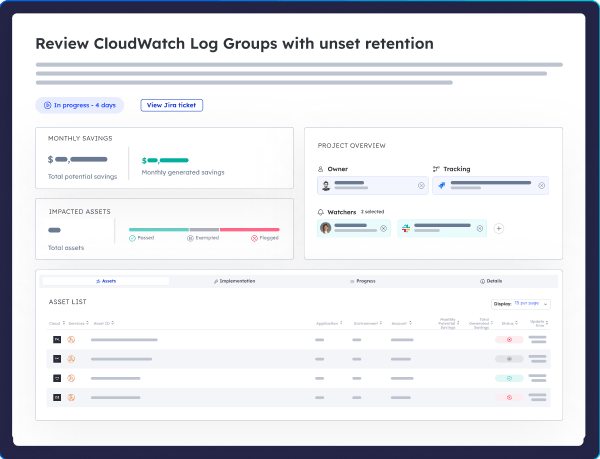
If you're considering a solution like CxM, purchasing through AWS Marketplace ensures it contributes to your EDP commitment while streamlining procurement.

Procurement Workflow
Buying through AWS Marketplace under an EDP contract requires a coordinated approach. Here’s how to structure it:
- Confirm EDP eligibility: Collaborate with your AWS account team to ensure the vendor and product are included in the EDP-approved Marketplace list.
- Coordinate with AWS: Structure the Marketplace transaction as part of your EDP agreement. AWS may need to issue custom pricing terms or billing structures to accommodate specific requirements.
- Apply spend toward EDP: Once confirmed, the transaction amount contributes to your EDP commitment and can push you into a higher discount tier.
- Manage via AWS Console: Track usage, renewals, and billing directly through the AWS Billing and Cost Management Console, consolidating vendor and cloud charges into one view.
For large enterprises managing dozens of third-party tools, Marketplace EDP purchases can significantly accelerate commitment fulfillment while simplifying procurement and governance.
How to Qualify and Negotiate an AWS EDP
Securing an AWS EDP agreement isn’t as simple as checking a box in your billing console. Instead, it’s a strategic negotiation that involves long-term planning, internal alignment, and ongoing optimization.
Whether you’re approaching your first EDP or renegotiating an existing deal, here’s a step-by-step process to ensure you qualify and get the most value.
1. Evaluate Your Current AWS Spend
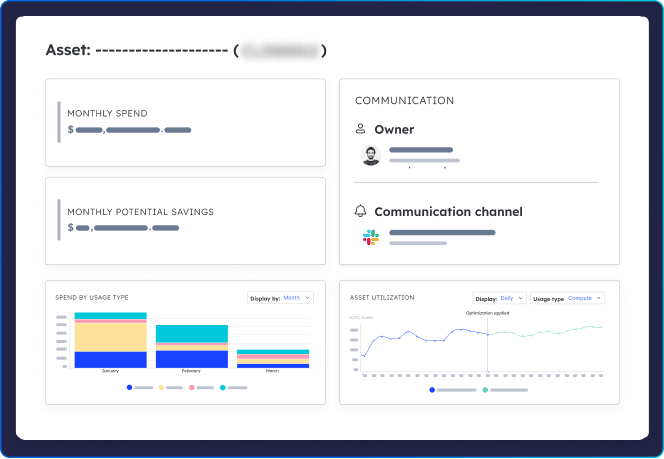
Start with a clear understanding of your current and projected cloud usage. Use AWS Cost and Usage Reports (CUR) to analyze your historical trends, and leverage tools like CxM to automatically map ownership across teams, environments, and services. This ownership mapping gives you a clean baseline of who’s spending what, so you can model growth across:
- Compute (EC2, Lambda, EKS)
- Storage (S3, EBS)
- AI/ML workloads (SageMaker, Bedrock, GPU clusters)
- Data pipelines and analytics services
This baseline serves as the foundation for establishing a responsible and flexible EDP commitment that reflects both your current usage and future scale.
Before setting your commitment, strip one-time charges, idle dev/test environments, and soon-to-be-decommissioned workloads from the baseline, and rightsize and eliminate waste first — commit on your optimized run-rate, not your current invoice. Because EDP commitments can only ratchet upward, any waste baked into the baseline becomes a permanent floor.
2. Contact Your AWS Sales Representative
EDP deals are not self-service; they’re done through AWS Enterprise Sales. Once your usage crosses the ~$1M/year threshold (or if you’re on track to get there), reach out to your AWS Account Manager with the following details:
- A multi-year cloud roadmap
- High-level budget targets
- Key business objectives (e.g., platform expansion, global deployment, AI adoption)
Providing these details helps AWS tailor your discount tiers, credit opportunities, and private pricing structures to your actual business needs.
3. Align Internal Stakeholders
An EDP isn’t just a procurement line item—it affects engineering delivery, finance forecasting, and executive planning. Make sure your stakeholders are aligned:
- Finance: Validates budget ranges, seeks predictability
- Procurement: Manages contract obligations and risk
- Engineering/Platform: Provides usage forecasts and implementation strategy
To ensure you don’t overcommit, and provide confidence in your negotiation stance, make sure to simulate EDP scenarios, including ramp periods, growth forecasts, and workload expansion.
4. Review Contract Terms
Before signing, negotiate key clauses to preserve flexibility:
- Ramp periods: Allows lower spend in early years while usage grows
- Marketplace eligibility: Ensure preferred vendors count toward the commitment
- Credit allocation: Lock in funding for migrations, POCs, or training
- Annual true-ups: Define how usage fluctuations are handled year-to-year
Understand the shortfall clause: EDP commitments are binding. If your actual spend falls short of your annual minimum at year-end, AWS bills the difference. Additionally, your commitment cannot decrease year-over-year — a $3M year-1 commitment becomes your permanent floor for the remaining term. This is why accurate pre-commitment forecasting isn't optional; it's the difference between EDP being a savings vehicle and a liability.
This is where executive sponsorship matters. Treat EDP like a strategic investment, not just a billing adjustment.
5. Implement Governance and Tracking
Once the deal is live, governance is critical. Failing to meet your spending commitments can result in lost discounts or penalties. To stay on track:
- Use FinOps dashboards to monitor EDP consumption in real time
- Track usage by team, service, and environment
- Proactively flag underutilized commitments and adjust workloads accordingly
Governance is about compliance, maximizing ROI, and turning your EDP from a cost-saving mechanism into a growth enabler.
CxM can alert you when commitments are at risk, recommend targeted increases (or reductions), and simulate the impact of new workloads on EDP milestones.
Best Practices for Maximizing AWS EDP Value

Signing an AWS Enterprise Discount Program (EDP) agreement is just the beginning. To extract the full value of your investment, organizations must treat EDP as a living, strategic asset that evolves in tandem with your infrastructure, workload mix, and business objectives.
Here are five proven best practices to help engineering, finance, and leadership teams make the most of their EDP commitment.
1. Treat EDP as a Strategic Asset, Not Just a Contract
Too often, EDP is treated as a procurement checkbox rather than a dynamic optimization tool. Instead, embed EDP management into your broader cloud governance model:
- Schedule quarterly reviews of usage vs. commitment
- Align optimization efforts with EDP milestones
- Track service mix changes to ensure discount realization
This mindset shift allows teams to proactively steer spend, rather than reactively chase targets.
2. Automate Forecasting and Reporting
Manual tracking of EDP utilization can lead to surprises—either underutilization penalties or missed optimization windows. Use automation platforms to:
- Automate commitment tracking and trend analysis
- Sync forecasting with engineering deployment plans
- Trigger alerts when usage deviates from expectations
Automation ensures engineering and finance stay aligned, without adding administrative overhead to already busy DevOps and FinOps teams.
3. Include EDP Commitments in FinOps Frameworks
Your EDP should be a core part of the FinOps Foundation’s Inform–Optimize–Operate cycle:
- Inform: Make engineering teams aware of EDP targets and implications
- Optimize: Continuously adjust workloads and commitments to align with usage
- Operate: Build feedback loops into CI/CD, observability, and sprint planning
By treating EDP as a shared KPI, organizations create cost-aware habits—not just dashboards—for sustained impact.
4. Leverage EDP to Fund Innovation
EDP discounts and credits can unlock budget for initiatives that would otherwise be delayed or deprioritized. Use EDP to invest in:
- AI/ML training and inference at scale
- Container and serverless migrations (EKS, Lambda)
- Modernization of legacy workloads
- Experimentation with new AWS services (e.g., Bedrock, Graviton)
When positioned as a growth accelerator, EDP becomes a tool for unlocking innovation—not just tightening budgets.
5. Re-Evaluate Before Renewal
Three to six months before your contract ends, conduct a comprehensive EDP health check:
- Commitment accuracy: Did you hit your targets, or did you over- or under-commit?
- Discount realization: What portion of your eligible spend actually benefited?
- Service mix evolution: Have your workload patterns shifted?
Armed with this data, you can renegotiate with confidence and optimize next-term pricing and flexibility. Combine usage telemetry, financial modeling, and projected workload growth to simulate multiple renewal paths before re-signing your next EDP.
Conclusion
For enterprises with growing cloud footprints, the AWS Enterprise Discount Program is more than a discount; it’s a strategic lever for financial predictability, platform maturity, and engineering enablement. But unlocking its full potential requires more than signing a contract. It requires proactive management, stakeholder alignment, and automation to keep commitments on track and optimize spending in real-time.
From budgeting confidence to innovation funding, AWS EDP can become a force multiplier—if paired with the right tools and practices.
Cloud ex Machina helps teams plan, track, and optimize their cloud consumption from day one. With automatic ownership mapping, forecasting automation, and real-time integration into engineering workflows, CxM ensures your commitment translates into measurable ROI—not missed opportunities.
Stop treating EDP as a billing artifact. Start managing it like a product.
Book a Demo of Cloud ex Machina and see how to make your next AWS EDP cycle your most valuable yet.