

Amazon Q is designed to sit directly inside the tools engineers already use and help them understand AWS infrastructure faster, with less friction. For teams operating at scale, it can reduce investigation time, speed up onboarding, and lower the mental overhead of working in complex environments. At the same time, it is not a replacement for structured ownership, accountability, or automated remediation.
This guide explains what Amazon Q is, how Amazon Q Developer works, and where it fits—and stops—in modern DevOps and cloud cost workflows, especially for teams managing growing AWS complexity.
Key Takeaways
- Amazon Q is an AWS-native conversational AI layer that helps engineers understand infrastructure, code, and operational context.
- Amazon Q Developer focuses on developer productivity inside IDEs, CLIs, and AWS consoles. It excels at explaining what exists and why something behaves the way it does.
- Amazon Q provides advisory guidance, not ownership or execution. For teams operating multiple accounts, services, and teams, insight alone is not enough—action and accountability matter.
What Is Amazon Q?
Amazon Q is an AWS-native conversational AI that helps users understand, explore, and interact with AWS resources using natural language. It pulls context from AWS services, permissions, and configurations to answer questions, explain infrastructure, and guide decisions without requiring users to dig through documentation or dashboards.
Amazon Q as an AWS-Native Conversational AI
Amazon Q operates inside the AWS ecosystem and understands AWS-specific primitives—accounts, regions, IAM roles, services, and configurations. This makes it especially useful for engineers who need quick answers about unfamiliar services or inherited environments. Rather than replacing documentation, Amazon Q acts as a context-aware interface layered on top of AWS.
Amazon Q as a Conversational Search and Action Layer
The tool allows engineers to ask questions like:
- “Why is this load balancer configured this way?”
- “What services are attached to this VPC?”
- “What changed in this account recently?”
It responds using the permissions and context available to the user, ensuring answers respect least-privilege access models.
How Amazon Q Differs from Traditional Docs and Dashboards
Traditional AWS documentation is comprehensive but static. Dashboards show metrics but often lack explanation. Amazon Q bridges that gap by:
- Translating AWS constructs into plain language
- Explaining relationships between services
- Reducing context switching between tools
However, the tool stops at explanation—it does not assign ownership, track follow-through, or verify outcomes.
Amazon Q AI Architecture Overview
Amazon Q is built as a multi-layered system on top of Amazon Bedrock, which provides access to multiple high-performing foundation models (FMs). Rather than relying on a single model, the tool routes each request to the most appropriate model based on the task, such as explanation, summarization, or code assistance. Context is pulled directly from the user’s AWS environment, including account structure, enabled services, and configuration metadata. This context is combined at runtime using a retrieval-augmented generation (RAG) approach, in which relevant information is retrieved from indexed data sources and injected into the model prompt before a response is generated. The result is answers that are grounded in the user’s actual infrastructure rather than generic cloud knowledge.
Role-Based Responses and Least-Privilege Awareness
Amazon Q is tightly aligned with AWS identity and access controls. It respects existing identities, roles, and permissions managed through AWS IAM Identity Center, ensuring users only see information they are authorized to access. Responses are shaped by the caller’s role, meaning a developer, operator, or business user may receive different levels of detail for the same question. This role awareness extends to connected enterprise data sources—such as S3, internal documentation systems, or SaaS platforms—so Amazon Q never surfaces data outside approved access boundaries. This design allows teams to safely use conversational AI without introducing new permission models or bypassing established controls.
Guardrails vs. Gates: Enabling Safe Defaults Without Blocking Delivery
Architecturally, Amazon Q favors guardrails over hard enforcement. Its AI agents and Model Context Protocol (MCP) servers can access AWS services and external systems in real time to provide recommendations, diagrams, or analyses, but they stop short of forcing changes. This allows the tool to guide engineers toward safer, more efficient defaults—such as flagging risky configurations or inefficient resource choices—without blocking deployments or introducing friction into delivery pipelines. Human validation remains part of the loop, which helps balance speed with safety in production environments.
Data Boundaries, Security Model, and Enterprise Readiness
Security and governance are foundational to Amazon Q’s architecture. All data is encrypted in transit and at rest, and customer content is not used to train underlying foundation models. Enterprise data sources are connected through secure, auditable connectors, and only indexed for retrieval within the customer’s own environment. Specialized AI agents handle distinct tasks—such as code generation, testing, security scanning, or application upgrades—within clearly defined boundaries. Combined with deep integrations into the AWS Management Console, IDEs, CLIs, and collaboration tools, this architecture makes Amazon Q enterprise-ready while keeping strict separation between insight, recommendation, and execution.
What Is Amazon Q Developer?
Amazon Q Developer is the developer-focused incarnation of Amazon Q, designed specifically to support engineers, DevOps teams, and SREs as they build, deploy, and operate applications on AWS. While Amazon Q broadly serves business users and technical stakeholders across an organization, Amazon Q Developer is optimized for software development and cloud operations workflows.
Amazon Q vs. Amazon Q Developer
|
Capability |
Amazon Q (General) |
Amazon Q Developer |
|
Primary Audience |
Business, operations, technical users |
Engineers, DevOps, SREs |
|
Interface |
AWS Console, chat |
IDEs, CLI, AWS tools |
|
Core Focus |
Understanding and exploration |
Development and operations |
|
Execution |
Advisory |
Advisory |
|
Ownership & Workflow |
None |
None |
How Amazon Q Developer Fits Into Developer Workflows
Amazon Q Developer embeds directly into the tools developers already use, including:
- Integrated Development Environments (IDEs)
- Command-line interfaces (CLIs)
- AWS-native development environments and consoles
This tight integration reduces context switching and shortens feedback loops by allowing developers to ask questions and get guidance in place, rather than jumping between documentation, dashboards, and ticketing systems.
What Amazon Q Developer Understands
Amazon Q Developer applies a developer-first lens to the same AWS-native, Bedrock-powered foundation as Amazon Q, with awareness across:
- Application source code
- Infrastructure-as-code templates (Terraform, CloudFormation)
- AWS service configurations and dependencies
- Operational and deployment context
Because it understands these layers together, it can explain not just what exists, but how components relate and why certain behaviors or costs occur.
Core Amazon Q Developer Features
Amazon Q Developer is designed to reduce the cognitive load of working in complex AWS environments by embedding contextual understanding directly into development and operations workflows.
1. Conversational Infrastructure Understanding
Amazon Q Developer allows engineers to ask natural language questions about their AWS environment and receive answers grounded in real configuration and account context.
Key capabilities include:
- Explaining AWS resources, services, and dependencies in plain language
- Translating AWS primitives (VPCs, IAM roles, load balancers, storage classes) into human-readable explanations
- Helping developers understand how infrastructure components are connected and why they are configured a certain way
- Assisting with troubleshooting by clarifying what exists, what changed, and how services interact
This is especially valuable when onboarding into unfamiliar environments, inheriting legacy infrastructure, or reviewing changes across multiple AWS services.
2. Code Assistance and Refactoring
Amazon Q Developer provides inline assistance directly inside IDEs and developer tools, supporting engineers throughout the software development lifecycle.
Amazon Q Developer — Code Assistance and Refactoring Capabilities
|
Capability Area |
What Amazon Q Developer Does |
When to Use It |
When Not to Rely on It |
Value for DevOps & SRE Teams |
|
Inline Coding Assistance |
Generates code snippets and examples; explains unfamiliar code patterns directly inside the IDE |
Implementing features, exploring new services, or working in unfamiliar codebases |
Enforcing coding standards or guaranteeing production-ready changes |
Faster iteration with less context switching during development and reviews |
|
Infrastructure as Code (IaC) Support |
Reviews Terraform and CloudFormation; explains resource definitions, variables, and dependencies |
Reviewing PRs, onboarding new engineers, or auditing infrastructure changes |
Managing cross-account orchestration or enforcing governance at scale |
Clearer IaC reviews and fewer misconfigurations entering production |
|
Refactoring & Modernization Guidance |
Suggests improvements for performance, reliability, and maintainability; assists with runtime upgrades and service migrations |
Modernizing legacy services or incrementally improving infrastructure |
Large-scale migrations requiring ownership tracking, prioritization, and execution management |
Reduced toil and faster modernization without disrupting delivery |
|
Security & Reliability Hints |
Highlights potential vulnerabilities and reliability risks; surfaces best-practice considerations |
Catching issues early during development and architectural reviews |
Replacing formal security scans, policy enforcement, or compliance controls |
Early risk detection without adding gates or slowing pipelines |
Importantly, these suggestions remain advisory, allowing developers to apply judgment and validation before making changes.
Cost- and Efficiency-Aware Guidance
Amazon Q Developer helps engineers build better cost awareness during development and operational decision-making, rather than waiting for issues to surface in reports.
Key capabilities include:
- Surfacing inefficient or potentially expensive configurations during code and infrastructure reviews
- Explaining pricing implications of architectural choices in clear, developer-friendly language
- Helping engineers understand why a workload or service costs more, not just that it does
- Connecting configuration decisions to performance and efficiency tradeoffs
This guidance supports the development of cost-conscious habits inside everyday workflows, without turning developers into finance operators or introducing additional dashboards.
Application and Code Transformation Support
Amazon Q Developer includes transformation-oriented capabilities that help teams modernize and maintain applications over time.
These include:
- Assisting with automated application upgrades (for example, Java version migrations)
- Helping refactor infrastructure and application code to align with current AWS best practices
- Identifying outdated patterns or deprecated services that introduce risk or inefficiency
While these capabilities can significantly reduce manual effort, human validation remains required—ensuring safety and correctness in production environments.
Advisory by Design
Across all of its core features, Amazon Q Developer is intentionally designed as an advisory system, not an execution engine.
It:
- Provides explanations, suggestions, and guidance
- Operates within existing permissions and access controls
- Does not enforce changes, take ownership, or execute remediation
This makes Amazon Q Developer a powerful productivity and learning accelerator for developers while keeping accountability and execution firmly in human-controlled workflows.
Amazon Q Developer Agents Explained

Amazon Q Developer agents extend Amazon Q Developer beyond simple question-and-answer interactions by introducing task-oriented, multi-step assistance that can operate across larger portions of the software development lifecycle. Rather than responding to a single prompt in isolation, agents are designed to reason through a goal, break it into steps, and guide developers through completion—while still keeping humans firmly in control.
At a high level, Amazon Q Developer agents are purpose-built AI assistants that combine large language models, AWS context, and tool access to help developers move faster on common but time-consuming engineering tasks.
What “Agents” Mean in Amazon Q Developer
In Amazon Q Developer, an agent represents a specialized AI capability focused on a specific category of work, such as:
- Application development and code changes
- Testing and validation
- Security analysis
- Infrastructure and configuration updates
Agents are not generic chatbots. They are goal-driven systems that understand how to sequence actions, request clarification when needed, and adapt based on intermediate results. This allows them to handle tasks that would otherwise require multiple manual steps and significant context switching by a developer.
How Amazon Q Developer Agents Work
Amazon Q Developer agents follow a structured workflow:
- Goal interpretation: The developer describes an objective in natural language (for example, adding a feature or updating an application component).
- Task decomposition: The agent breaks the request into smaller, logical steps such as code changes, test updates, or configuration adjustments.
- Context-aware execution planning: The agent uses repository context, existing code, AWS service knowledge, and best practices to determine how to approach each step.
- Iterative interaction: The agent may ask clarifying questions or present intermediate results for review before proceeding.
This approach allows agents to handle more complex requests than single-response assistants, while still operating transparently and interactively.
Autonomous vs. Assisted Execution Models
Amazon Q Developer agents operate in an assisted execution model, not a fully autonomous one.
- They can:
- Propose code changes
- Generate pull request-ready updates
Suggest test cases or security improvements - They do not:
- Merge code automatically
- Deploy changes to production
- Enforce policies or override developer decisions
This design ensures that agents accelerate work without removing human oversight, which is especially important in production-grade environments.
Event-Driven vs. Pull-Based Interactions
Amazon Q Developer agents can be engaged in two primary ways:
- Pull-based interactions: Developers explicitly ask the agent to perform a task or help solve a problem.
- Contextual assistance: Agents provide guidance based on the current codebase, configuration, or development activity, such as during reviews or refactoring efforts.
In both cases, the agent’s scope is defined by the developer’s request and permissions, preventing unexpected or uncontrolled actions.
Types of Tasks Amazon Q Developer Agents Support
Based on AWS guidance, Amazon Q Developer agents are particularly well-suited for:
- Code generation and modification
- Implementing features across multiple files
- Refactoring existing logic
- Testing and validation
- Updating or generating unit tests
- Helping ensure changes align with expected behavior
- Security-focused tasks
- Identifying potential vulnerabilities
- Suggesting safer patterns or configurations
- Modernization and upgrades
- Assisting with runtime upgrades
- Adapting applications to newer AWS services or APIs
These capabilities allow agents to reduce repetitive engineering work while preserving developer intent and control.
Limits of Agents Without Ownership and Workflow Integration
Despite their power, Amazon Q Developer agents have clear boundaries.
They do not:
- Assign ownership to teams or individuals
- Track whether suggested changes were implemented
- Verify long-term outcomes or impact
As a result, agent-generated recommendations can stall in environments where accountability, prioritization, or follow-through is unclear. This is not a flaw in design—it is a deliberate choice to keep agents safe and non-intrusive—but it does mean their effectiveness depends heavily on the surrounding workflow and organizational habits.
Amazon Q Developer Transform Capabilities
Amazon Q Developer's transformation capabilities are designed to help engineering teams modernize legacy applications and infrastructure faster, with less manual effort, by applying generative AI agents to complex, multi-step transformation work. These capabilities go beyond simple refactoring suggestions and focus on end-to-end modernization workflows, while still keeping developers in control of review and approval.
At a high level, Amazon Q Developer uses specialized generative AI agents to analyze existing systems, create a structured modernization plan, execute the required changes, and present results for validation—reducing months of manual work into guided, reviewable steps.
Note: Amazon Q Developer's core transformation capabilities include Java upgrades and .NET porting (also available as AWS Transform for .NET). Mainframe and VMware modernization were launched at re:Invent 2024 and have since been released as separate services under the AWS Transform umbrella, accessible via a dedicated web experience.
Automated Transformation Use Cases
Amazon Q Developer supports several high-impact transformation workloads that are traditionally expensive, risky, and time-consuming.
Key use cases include:
- Java application upgrades
- Automatically upgrading Java applications managed with Maven
- Supporting upgrades from Java 8 or 11 to modern long-term support versions — Java 17 or Java 21
- Updating language syntax, dependencies, and frameworks as part of the process
- .NET application porting
- Migrating Windows-based .NET Framework applications to Linux-compatible, cross-platform .NET
- Upgrading C# language versions
- Replacing Windows-specific APIs and packages
- Producing Linux compatibility readiness reports to highlight remaining gaps
- Mainframe modernization
- Refactoring legacy COBOL applications into cloud-optimized Java
- Preserving existing business logic while modernizing implementation
- Analyzing application artifacts, building dependency maps, and generating customized modernization plans
- VMware workload migration
- Automating the migration of on-premises virtualized workloads to Amazon EC2
- Performing application and data discovery
- Supporting wave planning for phased migrations
- Translating networking constructs, such as firewall rules, into AWS-native equivalents
- Generating Infrastructure-as-Code to support repeatable deployment and orchestration
These workloads reflect Amazon Q Developer’s focus on practical, production-grade modernization, not just code suggestions.
How Amazon Q Developer Executes Transformations
Amazon Q Developer transformations follow a structured, transparent process that balances automation with human oversight.
1. Analysis and Planning
The process begins with deep analysis of the existing environment. Amazon Q Developer examines source code, dependencies, configurations, and supporting artifacts to understand the scope and complexity of the transformation. Based on this analysis, it generates a customized transformation plan outlining what will change, how it will change, and where manual decisions may be required.
2. User Review and Approval
Before any changes are applied, teams review the proposed plan. Developers can adjust assumptions, clarify intent, or approve the plan as-is. This interactive step ensures that transformations align with architectural goals, risk tolerance, and operational constraints.
3. Automated Execution
Once approved, the Amazon Q Developer agent executes the transformation plan. This may include:
- Rewriting code
- Replacing or upgrading dependencies
- Updating configurations
- Adjusting build and deployment artifacts
During execution, the agent provides visibility into progress and flags any issues that require manual intervention.
4. Validation and Review
After execution, Amazon Q Developer produces a detailed summary of changes—often presented as a diff view—along with readiness or compatibility reports where applicable. Developers can review the results, validate correctness, and decide whether to accept the in-place updates.
Where Human Validation Is Still Required
Despite the high degree of automation, Amazon Q Developer is intentionally designed to keep humans in the loop:
- Developers approve transformation plans before execution
- Generated changes require review before being committed
- Edge cases, business logic nuances, and risk tradeoffs remain human decisions
This approach reduces modernization effort without introducing blind automation into critical systems.
Risk Management in Automated Transformations
Amazon Q Developer’s transformation capabilities are powerful, but they are bound by clear safeguards:
- No changes are applied without explicit user approval
- Transformations are reversible and reviewable
- Execution is scoped to the developer’s permissions and environment context
This makes the tool well-suited for accelerating modernization while maintaining production safety.
When Amazon Q Is the Right Tool—and When Teams Need More

Amazon Q and Amazon Q Developer are most effective when used with a clear understanding of what they are designed to accelerate and where their responsibilities intentionally stop. For many teams, Amazon Q is an excellent productivity layer. For others, it is a necessary but incomplete piece of a larger system.
When Amazon Q Is the Right Tool
Amazon Q is a strong fit in scenarios where the primary goal is to improve developer speed, understanding, and confidence:
- Teams heavily invested in AWS: Amazon Q is AWS-native and excels when infrastructure, applications, and operations are primarily within the AWS ecosystem.
- Developer-led organizations prioritizing speed: Teams that value rapid iteration, self-service learning, and reduced context switching benefit from Amazon Q’s in-workflow guidance.
- Early or mid-stage DevOps maturity: Organizations still building shared understanding of their cloud environment can use Amazon Q to accelerate onboarding and reduce dependency on tribal knowledge.
- High cognitive load environments: In complex architectures or inherited systems, Amazon Q helps engineers quickly answer “what is this?” and “why does it work this way?” without digging through documentation or dashboards.
In these contexts, Amazon Q delivers immediate value by lowering friction and increasing individual developer throughput.
When Teams Need More Than Amazon Q
As organizations scale, the limits of advisory-only tooling become more apparent. Teams often need additional capabilities when they face:
- Multi-team, multi-account environments: Amazon Q can explain infrastructure, but it does not assign ownership, prioritize work, or coordinate across teams.
- Budget accountability at scale: While Amazon Q can explain why something is expensive, it does not connect actions to budgets, KPIs, or business outcomes.
- Continuous optimization requirements: Advisory insights alone are insufficient when optimization must be ongoing, measurable, and verified over time.
- Advice without action fatigue: In large organizations, recommendations often stall without clear ownership, execution pathways, or follow-through mechanisms.
In these scenarios, teams need systems that go beyond explanation and guidance—systems that connect insight to ownership, execution, and verification.
Bridging the Gap from Insight to Action
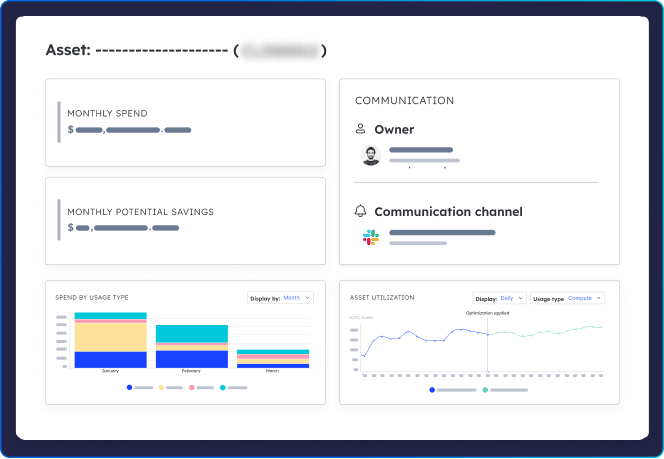
Amazon Q excels at helping engineers understand their environment and make better local decisions. However, it intentionally avoids taking responsibility for execution or outcomes. Platforms like Cloud ex Machina are designed to close this gap. CxM maps workloads across accounts without requiring complete tag coverage, identifies the specific savings opportunities — idle environments, overprovisioned Fargate tasks, expiring Reserved Instances — and assigns them to named owners with scoped implementation steps. CxM AI then proposes a plan that can translate directly into a Jira ticket or a Terraform PR, which your team or a coding agent like Amazon Q Developer can act on immediately.

Conclusion: Where Amazon Q Fits
Amazon Q is a valuable conversational layer for AWS. It helps engineers move faster, understand infrastructure better, and build stronger cost-aware habits during development. However, it’s important to remember that it isn’t an execution engine.
For organizations managing complex environments, insight must connect to ownership, action, and verification. Amazon Q explains the problem. Cloud Ex Machina (CxM) ensures it gets fixed—CxM identifies the specific savings opportunities, assigns them to named owners, and proposes a scoped plan as a Jira ticket or Terraform PR that your team or a coding agent like Amazon Q Developer can act on immediately.
If your team is ready to move from understanding to outcomes, Cloud Ex Machina can help. Book a demo today to get started.